

Pre-employment assessments are standardized tests that measure a job candidate's abilities, traits or skills before a hiring decision is made. The most common types assess cognitive aptitude, personality, emotional intelligence, job-specific skills and risk of counterproductive behavior. Decades of research show that well-designed assessments predict job performance better than resumes and unstructured interviews, and the strongest hiring processes combine several of them with structured interviews. With AI making resumes harder to trust, more employers are using assessments to see what candidates can actually do.
A pre-employment assessment is any standardized test an employer uses to evaluate job candidates on the same terms. Every applicant answers the same questions under the same conditions, and their results are scored against the same benchmark. That consistency separates an assessment from a resume review or a casual interview, where what gets noticed depends on who is reading or asking.
In a 2022 survey of nearly 1,700 employers, the Society for Human Resource Management found that 56% already use pre-employment assessments to measure applicants' knowledge, skills and abilities. Among those employers, 78% said the quality of their hires had improved.
Employers' growing distrust of resumes has added to the case for testing. Nearly a quarter of hiring professionals in Criteria's 2026-2027 Hiring Benchmark Report said they no longer trust the resume as a reliable signal, and 98% of employers in a separate study by Criteria and Lighthouse Research & Advisory rated skills assessments, structured interviews and work samples as more reliable than resumes. "The future of hiring will rely less on what looks good on paper and more on objective signals that show how someone will actually perform," Josh Millet, Criteria's co-founder and CEO, said in March.
Types of pre-employment assessments
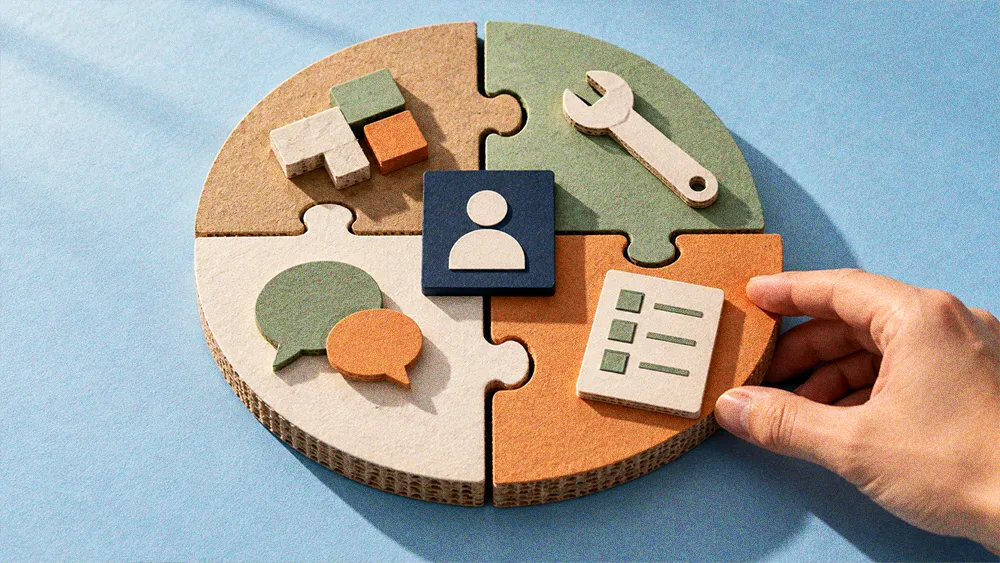
Criteria's guide to assessment types describes each category by the question it answers about a candidate. Aptitude tests address whether a person can do the job, personality tests whether they will be comfortable in it, and skills tests what competencies they bring right now.
Cognitive aptitude tests
Cognitive aptitude tests measure how well a person solves problems, learns new information, reasons through unfamiliar situations and thinks critically. They typically include verbal, numerical, logical and spatial questions under a time limit. Because they measure the capacity to learn, they are especially useful for roles that change quickly or require ongoing training, and for screening candidates who have little work history. The Criteria Cognitive Aptitude Test (CCAT), a 15-minute, 50-question test, has been administered more than 4 million times.
Personality assessments
Personality assessments measure stable traits that shape how someone approaches work, such as conscientiousness, cooperativeness, stress tolerance and assertiveness. Many are built on the Big Five model of personality. They are most useful for judging fit with the demands of a specific role, such as the persistence a sales job requires or the patience a support role calls for. Personality traits predict job performance more modestly than ability tests on their own, so employers usually pair them with other measures.
Emotional intelligence assessments
Emotional intelligence assessments measure how well a person perceives, understands and manages emotions, both their own and other people's. The stronger versions are ability-based, asking candidates to read facial expressions or choose how to handle an emotionally charged situation instead of rating themselves. They are most relevant for customer-facing, caregiving and leadership roles.
Skills tests
Skills tests measure what a candidate can do today, such as typing speed, spreadsheet proficiency, basic math and reading comprehension, or a second language. They are straightforward to defend because the link between the test and the job is direct, and they work well for administrative, clerical and many entry-level roles.
Risk and integrity assessments
Risk assessments estimate how likely a candidate is to engage in counterproductive or unsafe behavior at work, such as ignoring safety rules, missing shifts or bending policies. They are common in manufacturing, logistics, retail and other roles where reliability and safety carry real costs.
Work samples and job simulations
Work samples ask candidates to perform a realistic piece of the job, such as writing a short report, handling a simulated customer call or debugging code. They give a direct view of performance, though they take longer to build and score than standardized tests.
Game-based assessments
Game-based assessments measure cognitive ability or behavioral traits through short interactive tasks instead of traditional questions. Candidates, particularly younger ones, often find them more engaging, and the format makes it harder to fake answers or look them up.
How accurate are pre-employment assessments?
What predictive validity means
Industrial-organizational psychologists judge a hiring method by its predictive validity, the strength of the relationship between how candidates score and how they later perform on the job. Validity is expressed as a correlation between 0 and 1. No hiring method comes close to perfect, because job performance depends on many things a test can't capture, but even moderate validity adds up across hundreds or thousands of hires.
What the research shows
For more than two decades, the standard reference was a 1998 review by Frank Schmidt and John Hunter, which summarized 85 years of research and ranked cognitive ability, work samples and structured interviews as the strongest single predictors of job performance. In 2022, a team led by Paul Sackett of the University of Minnesota revisited those estimates and found that earlier statistical corrections had overstated validity across the board. The ranking shifted, and standardized, job-related methods still outperformed informal ones by a wide margin.
In the updated estimates, structured interviews led all methods at .42, followed by job knowledge tests at .40, empirically keyed biographical data at .38, work samples at .33 and cognitive ability tests at .31. Unstructured interviews came in at .19, and years of job experience barely registered. "Structured interviews emerged as the predictor with the highest mean validity," the researchers wrote in a 2023 follow-up, adding that "it would be incorrect to view our work as challenging the value of I/O selection practice."
For employers, this means standardized assessments and structured interviews are far more predictive than the methods many companies still rely on, including resume screens, gut-feel interviews and years of experience. Combining methods improves prediction further, since each one captures something the others miss. Schmidt and Hunter found that pairing a cognitive ability test with a structured interview or an integrity test raised validity well above either measure alone.
Fairness and the law
Under Title VII of the Civil Rights Act, a selection procedure that disproportionately screens out a protected group must be "job-related and consistent with business necessity," according to the Equal Employment Opportunity Commission. Federal agencies commonly use the four-fifths rule from the 1978 Uniform Guidelines on Employee Selection Procedures as a first check. If one group's selection rate is less than 80% of the rate for the group with the highest rate, that is generally treated as evidence of adverse impact.
The EEOC removed its technical guidance on AI in hiring in January 2025, but the underlying law did not change, and employers remain responsible for the tools they use even when a vendor built them. That makes validation evidence and bias testing basic questions to ask of any assessment provider. Criteria reports that an independent audit completed in June 2026, covering more than 300,000 candidates over five years and using the data standards required by New York City's Local Law 144, found no practically significant disparate impact by gender or race.
How to use pre-employment assessments well
Start with the job
Every assessment decision should trace back to what the role actually requires. A job analysis identifies the knowledge, skills, abilities and behaviors that separate strong performers from weak ones, and that analysis determines which tests belong in the process. A call center role might call for basic skills, personality and typing tests, while an analyst role might lean on cognitive aptitude. A clear connection between the test and the job also makes the process legally defensible.
Combine measures and keep them short
Because each method captures something different, most effective processes pair an ability measure with a personality or skills measure and follow it with a structured interview. Length matters to candidates, so employers generally keep the full battery well under an hour and place assessments early enough to inform screening without discouraging qualified applicants.
The results can show up in retention as well as performance. After Heartland ECSI added Criteria's cognitive, personality and skills tests to its call center hiring, turnover fell from about 75% to 26% and 90-day retention rose from 50% to 91%. "There's a real production drag that happens when half your staff is brand new," said Mike Bowman, the company's senior call center manager.
Use scores to inform decisions
Assessment results work best as one input among several, weighed alongside interviews, references and the hiring manager's judgment. Rigid cutoff scores applied without validation evidence can screen out good candidates and raise legal risk. Employers should also check their own results periodically for adverse impact and confirm that the tests predict performance in their own workforce.
The same principle applies to AI-powered tools. "AI doesn't make hiring decisions at Criteria, people do," Chris Daden, Criteria's chief technology and AI officer, wrote when the company earned ISO 42001 certification, an international standard for managing AI systems responsibly.
Protect the integrity of results
With candidates using AI throughout the application process, online assessments need safeguards. Timed tests, large question banks and adaptive formats make answers harder to look up, and AI proctoring can confirm that the person taking the test is the person who applied and flag signs of outside help. Candidates should be told up front how the assessment is monitored.
Design for the candidate
Candidates increasingly welcome a process built on evidence of ability. In Criteria's 2026 Candidate Experience Report, 68% of job seekers said they would be willing to drop the resume in favor of a process focused on science-based assessments and structured interviews. Clear instructions, mobile-friendly formats, reasonable length and accommodations for candidates with disabilities all help that preference translate into completed applications.
FAQ
What is a pre-employment assessment?
A pre-employment assessment is a standardized test employers use to measure job candidates' abilities, personality traits, skills or behaviors before making a hiring decision. Every candidate takes the same test under the same conditions, which makes results comparable across applicants.
What are the main types of pre-employment tests?
The most common types are cognitive aptitude tests, personality assessments, emotional intelligence assessments, skills tests, risk or integrity assessments, work samples and game-based assessments. Many employers combine two or more types with a structured interview.
Are pre-employment assessments accurate?
Well-designed assessments predict job performance considerably better than resumes, years of experience or unstructured interviews. In a 2022 review of selection research by Paul Sackett and colleagues, structured interviews (.42), job knowledge tests (.40), work samples (.33) and cognitive ability tests (.31) all outperformed unstructured interviews (.19). Combining methods improves accuracy further.
Are pre-employment tests legal?
Yes. Employers may use pre-employment tests as long as they are job-related and consistent with business necessity under Title VII. Employers should confirm that tests have been validated, monitor results for adverse impact using measures such as the four-fifths rule, and provide reasonable accommodations for candidates with disabilities.
How long should a pre-employment assessment take?
Most individual tests take 5 to 20 minutes. Employers generally keep the full set of assessments for a role well under an hour to avoid losing qualified candidates.
Can candidates cheat on pre-employment assessments with AI?
Candidates can attempt it, but timed formats, large question banks, adaptive tests and AI proctoring that verifies identity and flags outside help make cheating considerably harder and give employers more confidence that scores reflect a candidate's own ability.