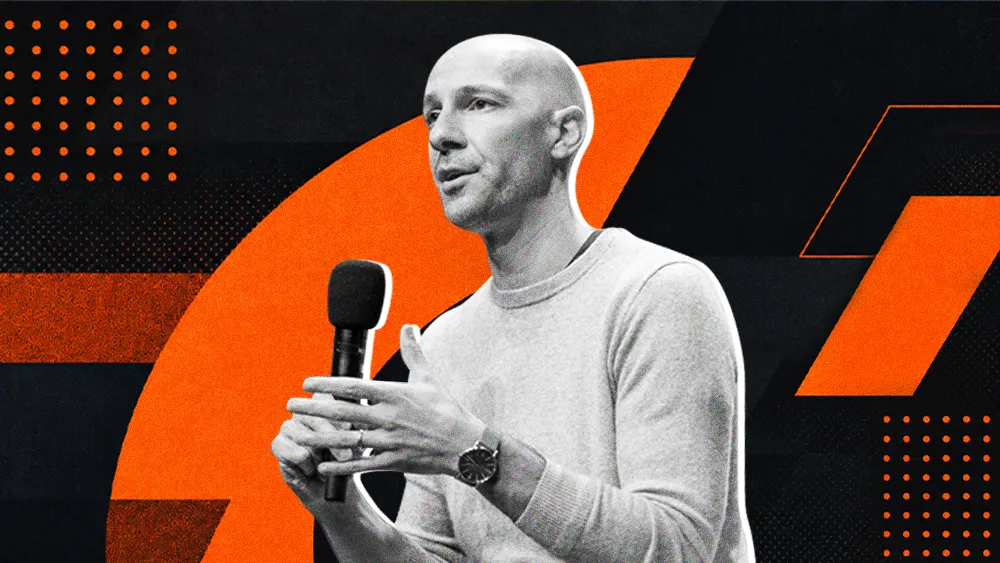



If it's just me and one other person, that's fine. But when four people have to be involved, please automate that. There's no reason not to.
 Brett DyessSenior Recruiting Leader
Finding qualified candidates is only one part of recruiting. Bringing them into the hiring process requires outreach, follow-ups, and interview coordination, often consuming considerable time before a recruiter speaks with anyone. AI can now automate much of that work, and its growing ability to conduct initial phone screens is prompting recruiters to consider how far they're willing to delegate candidate interactions.
Brett Dyess is a Senior Talent Acquisition Leader who focuses on engineering and supply chain hiring, with more than 15 years of experience across agency and corporate recruitment. Alongside his professional responsibilities, he's been independently experimenting with AI and TA workflows to automate sourcing, outreach, and scheduling while maintaining control over the recruiting process.
"AI isn’t replacing me. It's replacing the busywork I'm doing," Dyess says. He sees considerable potential in automating the administrative work surrounding recruitment, although his experience with AI-powered interviews has made him more selective about delegating direct candidate interactions.
AI agents are accelerating the path from sourcing to interviews
Speed and accuracy are central to Dyess's recruiting priorities, particularly when identifying passive candidates and moving them through the hiring process. To accelerate that work, he's developing an AI-powered sourcing agent that uses job requirements to automatically identify prospects, add them to a database, initiate a three-step outreach sequence, and schedule meetings directly on his calendar. "Most of that can be automated," he says. "That's what I've been working on: how to race through that process."
Scheduling becomes particularly time-consuming when multiple participants need to coordinate their availability. "If it's just me and one other person, that's fine. But when four people have to be involved, please automate that. There's no reason not to," Dyess explains. By automating these steps, he can move candidates from initial identification to a conversation with less manual coordination.
Growing confidence in AI doesn't mean giving it complete control
Dyess's interest in task-executing AI developed gradually. Initially resistant to ChatGPT, he began taking courses that introduced him to custom chatbots and more advanced capabilities. Those experiments eventually led him to build workflows that could carry out defined activities instead of requiring him to act on every recommendation. His use of AI now extends beyond recruiting. Each morning, a chatbot prepares a research briefing covering engineering, supply chain, and AI infrastructure. "It gives me articles with quick summaries and recommends my top three choices for the day," Dyess says. "It also remembers what I've already covered and what's coming next."
Although the system can prepare content and manage parts of his publishing workflow, Dyess retains the final control. "I don't let it publish for me," he says. "It has that ability, but I refuse to let AI automatically post anything on a social profile. I'm not ready for that yet."
AI-powered interviews are pushing the limits of recruiting automation
Initial phone screens can occupy a substantial portion of a recruiter's day, making them an attractive opportunity for automation. Dyess has participated in an AI-conducted screening interview during his own job search, and deliberately tested the system to see how it would respond. Interestingly, the AI recognized what he was attempting and continued the conversation effectively. Its performance left him impressed by how far automated interviewing had progressed. "The thing was freaky good. I was scared and excited at the same time," Dyess says.
Despite recognizing the system's capabilities, he remains reluctant to use AI for his own candidate interviews. He acknowledges that automated screening tools are already commercially available and can reduce the time recruiters spend conducting initial conversations, but he still values speaking directly with applicants. "That's the fun part of recruiting. I hear so much interesting, sometimes crazy stuff from candidates every day, and I learn a lot from them," Dyess says.
Human interaction remains a priority as AI screening advances
As AI screening becomes more capable and widely available, recruiters will have more flexibility in deciding how they conduct initial interviews. Dyess expects the technology to take on more sourcing, scheduling, and screening responsibilities. For now, he's comfortable allowing AI to handle much of the work leading up to an interview, while leaving the conversation itself in human hands. "I can't imagine how much further it might go, because there still has to be a human-to-human component," he concludes.
The AI workflows described here are Brett Dyess’s independent projects and do not represent the official systems or capabilities of any organization.