
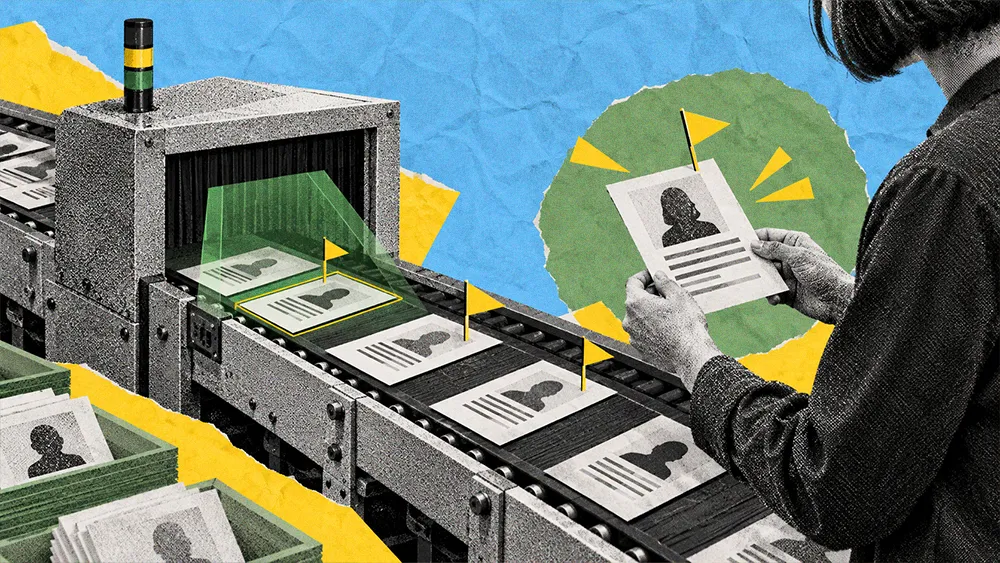

We have all these tools, but they make human judgment even more important, not less.
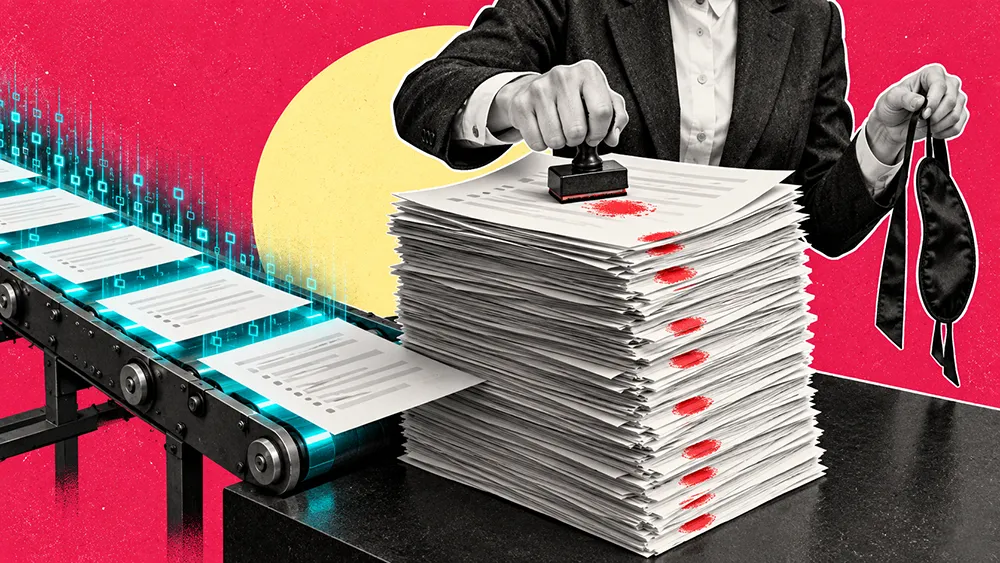
AI has made it trivial to flood a hiring funnel with applications that look real and often aren't, and the instinctive response has been to answer machines with more machines: better detection, tighter filters, another tool bolted to the top of the funnel. That arms race has a ceiling. The teams pulling ahead are treating technology as the first pass and human judgment as the thing that actually decides, because when anything on a screen can be fabricated, the discipline of checking what the tools hand you is what separates a real hire from an expensive mistake.
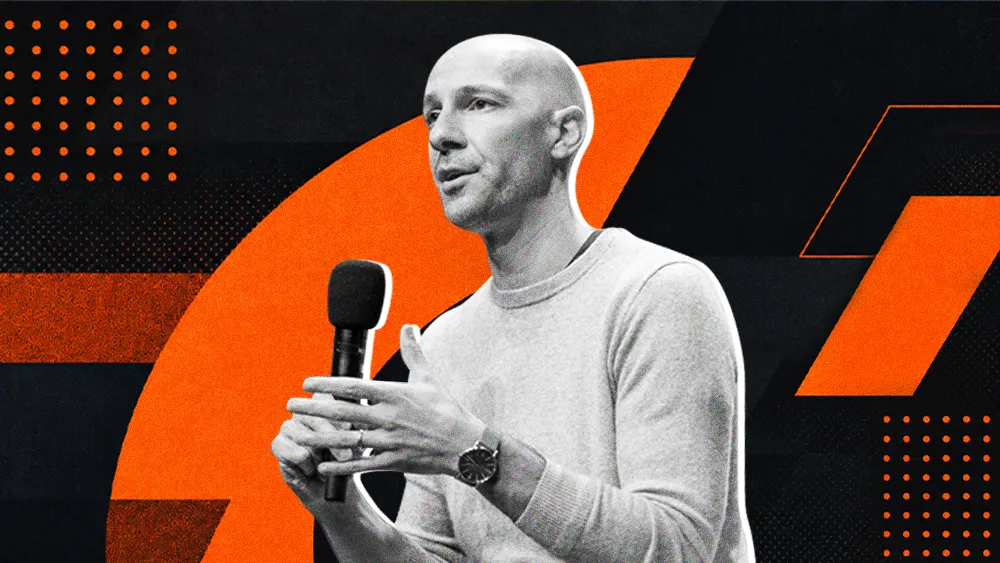
Hope Weatherford is Vice President of Talent and People Operations at Camunda, the process-orchestration software company, where she leads hiring in a function that has become a favorite target for exactly this kind of manipulation. She's emphatic that she's pro-AI, in her work and her personal life, which makes her argument about its limits more pointed: the more capable the tools get, the more the human in the loop matters.
"We have all these tools, but they make human judgment even more important, not less," she says.
The problem changed shape in two years
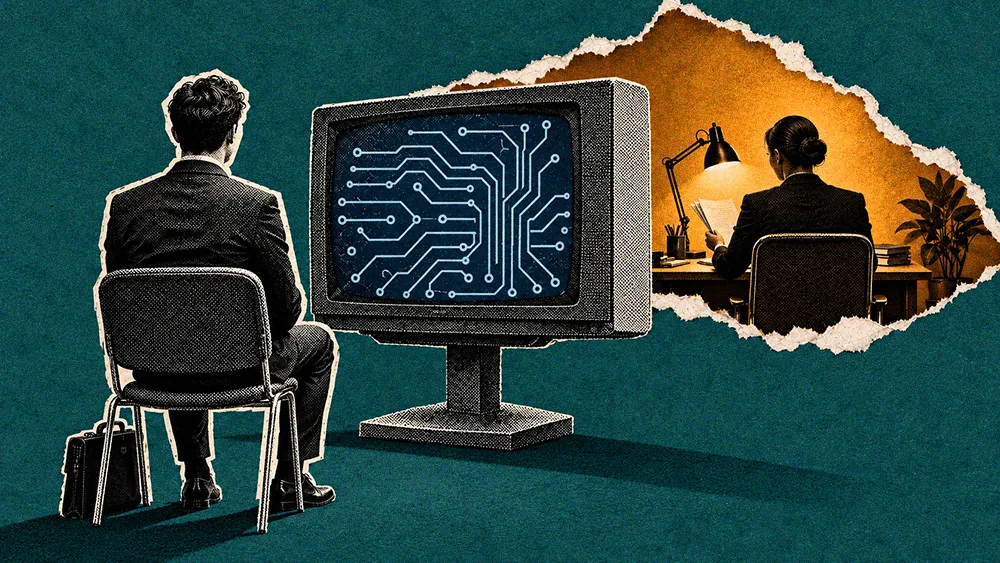
Weatherford is precise about how fast the ground moved. The fraud of two years ago was crude and rare. Today it's sophisticated and constant, and it arrives alongside a flood of ordinary noise. "Two years ago we were dealing with people making separate resumes for themselves," she says. "You weren't ever thinking about deepfakes, AI profiles or avatars coming into interviews." The shift is industry-wide, with Gartner projecting that one in four candidate profiles could be fake by 2028 and a share of candidates already admitting to some form of interview fraud.
The volume problem compounds the authenticity one. A single applicant can now "create and send out 300 resumes that are all different from each other in an hour," she notes, which buries the real candidates under machine-made sameness. What she refuses to accept is that the answer is to turn recruiters into investigators. "A recruiter shouldn't have to be the global equivalent to the FBI to make a hire," she asserts. "We're asking people to say, 'Is this person real? Is their experience real? Is this LinkedIn profile real?'"
The strain she describes is now the industry norm: in Criteria’s 2026-2027 Hiring Benchmark Report, a survey of more than 1,000 hiring professionals, 41% said they struggle with candidates using AI to misrepresent themselves, a figure that climbs to 60% in technology roles, which is exactly where Weatherford says she sees the most of it.
Detection without judgment overcorrects
The danger in an authenticity panic, in Weatherford's telling, is that it trains teams to reject on weak signals, and the weak signals punish real people. She's quick to share examples because she's watched them happen. "This person doesn't have a picture on their LinkedIn, so surely it's not a real profile," she says, imitating the reflex. "It can go that extreme really quickly when there are a lot of really amazing candidates that just don't want to put their face on LinkedIn."
The same trap catches a candidate whose IP address sits in a different city than their area code, which usually means nothing more sinister than that a person moved. The candidates are watching this happen, too: Gartner found that just 26% of job applicants trust AI to evaluate them fairly, a wariness a heavy-handed fraud screen only deepens. A process tuned to catch fakes starts discarding the humans it was supposed to find, which is why she insists the tool can't have the last word.
Inspect what you expect
Weatherford's organizing phrase for the fix is one she's carried across jobs, and it predates the fraud problem. The tools do the first pass; a person inspects what they produce before it counts. "Inspect what you expect," she says, is the posture that keeps both failure modes in check.
Her team runs fraud detection from the application stage through the interview, built into the technology they already use, but she treats every automated verdict as a claim to be checked rather than a decision to be trusted. "It's not foolproof," she notes, describing candidates who clear the first pass and turn out to be reading from a script, and others flagged by a tool who turn out to be exactly who they said they were. That gap between what a tool flags and what is true is one a growing share of employers admit they can't reliably close.
The judgment call sits with the human on purpose, because that's the only place it can safely sit. The same logic governs where she brings in help: fraud isn't a problem the talent team owns alone, so she works it jointly with IT and legal rather than asking recruiters to carry it.
Protecting the candidate while protecting the business
The hardest part, and the one Weatherford says no one has solved, is doing all of this without treating every applicant as a suspect. Over-rotate toward suspicion and you wreck the experience for the people you most want to hire. "If you just go in assuming that everyone's fake, then you're really creating a prove-you're-not-fake situation, and you can't do that either."
She has seen the overcorrection get absurd, with interviewers asking candidates to point to where the sun is to prove they're human. "Just imagine if that were you. Are you serious right now?" The balance she's after holds two obligations at once: verify enough to protect the business, but never so aggressively that a real candidate walks away insulted. She's candid that the field still has a way to go. "I don't know that any of us have perfected that yet."
The harder question underneath the fraud
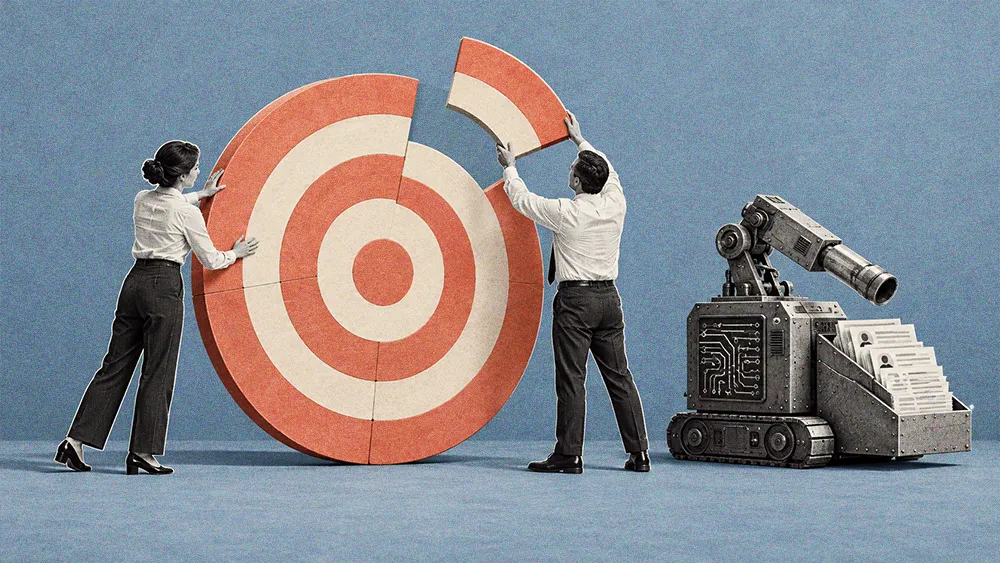
Once the authenticity problem is contained, Weatherford says, a deeper one surfaces: how do you actually measure what a person can do? Assessments help, with a caveat, because her team deliberately wants candidates using AI the right way. "Use AI in your preparation, but use yourself in your thought process on how you got there, why you got there," she says, describing the line her team draws. That makes a skills test less useful, because the test can be gamed, and it pushes her toward a more durable question. "Everybody's been talking about skills-based hiring for a really long time, but does that matter as much now as the capabilities of someone coming in?"
When AI can supply the technical skill on demand, the thing worth measuring shifts toward judgment, reasoning, and the human qualities a model can't fake for a candidate, which is exactly the signal a validated assessment is built to surface.
The posture, not the tool
What ties Weatherford's argument together is a refusal to let the technology make the final call, in either direction, whether it's clearing a fraudulent candidate or flagging a real one. The tools are necessary and she wants more of them, but they're not enough on their own. "We've just got to come up with smarter hiring processes," she says, and in her telling smarter does not mean more automated. It means a process where a person is accountable for the decision the machine recommends, where verification protects the business without insulting the candidate, and where the point of measurement is what someone can genuinely do.
The flood of AI-generated noise isn't going away, and neither is the temptation to answer it with one more filter. Weatherford's bet is on the opposite instinct: as the tools get better, keep a human in the loop, and inspect what you expect.