

We really need to make sure that we have a task and capability mindset at the forefront. This is how we're going to design the skills intelligence, and then know which of our tech platforms are actually being sourced to do it.
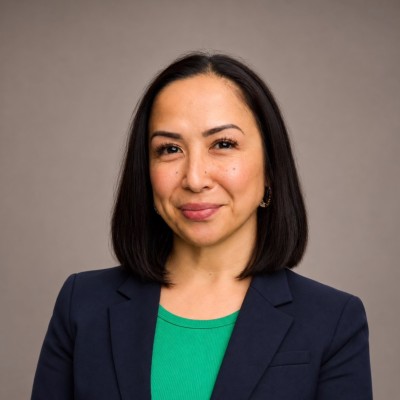 Emlyn De LeonTask & Skills Redesign Lead, Strategic Workforce Planning, USAA
A skills taxonomy is usually assembled from job descriptions that list the tasks a role was performing at the time when the description was written. AI has since absorbed some of those original tasks and changed others. Skills drawn from the original tasks can still produce a taxonomy that looks complete, with an entry for each role and skills under each entry. Whether those skills actually belong to work anyone's still doing is a question that often arrives after the taxonomy is finished.
Emlyn De Leon leads Task and Skills Redesign within Strategic Workforce Planning at USAA. She assesses how much of a role a new tool will take over, then designs how the role divides between the person and the tool. De Leon built the company's method for deciding which skills a role requires and a process that keeps those requirements current. Her earlier roles include Senior Workforce Intelligence and Transformation Lead at Nielsen, and workforce planning, global mobility, and people operations at Citi and McKinsey. A U.S. Army veteran, De Leon also writes Work to Workforce, a weekly newsletter for leaders deciding how AI changes what their people do.
"We really need to make sure that we have a task and capability mindset at the forefront. This is how we're going to design the skills intelligence, and then know which of our tech platforms are actually being sourced to do it," says De Leon. The first layer is an inventory of the tasks in a role and the share of each one a given tool will take over. Both the skills layer and the choice of platform rest on it, and De Leon set that order at USAA ahead of the taxonomy work.
Before the taxonomy
De Leon arrived at USAA earlier this year and was assigned the skills work in her first weeks. The skills rebuild had a scope and a team behind it, and the direction was settled before she arrived. "Everyone was saying, 'We've got to get the skills up. We don't have a skills taxonomy. We need to rebuild it,'" De Leon recalls. "Then I was asking, 'What's our strategy? What do our job profiles look like? Are we collaborating with compensation and rewards?'"
A skills taxonomy touches compensation, job profiles, and the people who own each of them, so no one group could answer De Leon's question on its own. Answering it meant persuading teams already committed to a different starting point. "Exercising the open door policy helped me find who my champion advocate would be," De Leon recalls. "Then it got to senior leadership asking, 'This is a good question. Where are we going with this?'"
The order De Leon proposed starts from a decision the business has already made. Every skills requirement it produces can then be traced back to that decision. "You start with what the business problem or the business strategy is," she explains. "Then you assess what capability gaps that creates, construct the workforce decision, and place it onto the business."
Governance and its exceptions
Skills entries accumulate in whatever platform collects them first. A record a platform builds on its own carries weight as a second personnel file, whether or not anyone appointed it. "Workday is our human capital source, and that'll always be our system of record, no matter what," says De Leon. "But when it comes to the skills intelligence, which is it? Are you saying it's going to come from the compensation tool, and if so, why? And what are the governance layers that would support that?"
Answering those questions gives each platform one defined job in the flow of skills data. With every input in that flow fixed, De Leon's counterparts in HR, analytics, technology, and risk could take up proficiency levels without reopening those inputs. "Once we started creating a stewardship model for our tech stack, it was a lot easier to understand what exactly that skills data flow would look like," she adds. "It makes everybody look toward this huge navigational plan, where your North Star is, and everyone is in line."
In the case De Leon describes, a business unit picks up a new AI platform and none of the company's existing roles covers the work it creates. Total rewards takes the first conversation, and the work gets its own posting while the rest of the architecture stays as it is. "Those business leaders will then say, 'We don't want to disrupt what we've designed so far in reference to our job architecture. This is just for this moment,'" she notes. "Then we look at the governance of taking a static job description and adjusting it for those hires."
Passion, empathy, and judgment
Screening software now reads and scores resumes and recorded interviews before they reach a recruiter, who then works from a pre-ranked list. The ranking answers one question: who clears the first filter. Past that filter, the hiring manager's judgment decides whether a candidate can sit with a client or carry work across several parts of the business. "AI is not taking over our jobs. It always needs a human, whether it's in the loop or on the loop," says De Leon. "It's just there as an added resource tool to give us another perspective, like a friend who says, 'Did you ever think about this?'"
Candidates prepare against that same scoring, and much of that preparation is aimed at beating a screen. At HR Tech this year, De Leon found a floor of products built around that screen, most of them for hiring managers and recruiters. The question she put to those vendors was what their products did for the applicant, as the applicant's side is one she knows from her own interviews. "AI will never pick up that signal of the human's passion towards the interest in the role," she says.
More hiring tools are on the way, and their design choices are being made now. Accountability built into a hiring process is one of those choices, and what the applicant gets out of it is another. "We have to think about how we're really leaning in on making sure that it gives that candidate a fair opportunity," De Leon concludes. "That's why I always like to make sure we're reciprocating that fair opportunity, as well as ensuring that we are giving that sound judgment and understanding that human empathy and human passion is still there."