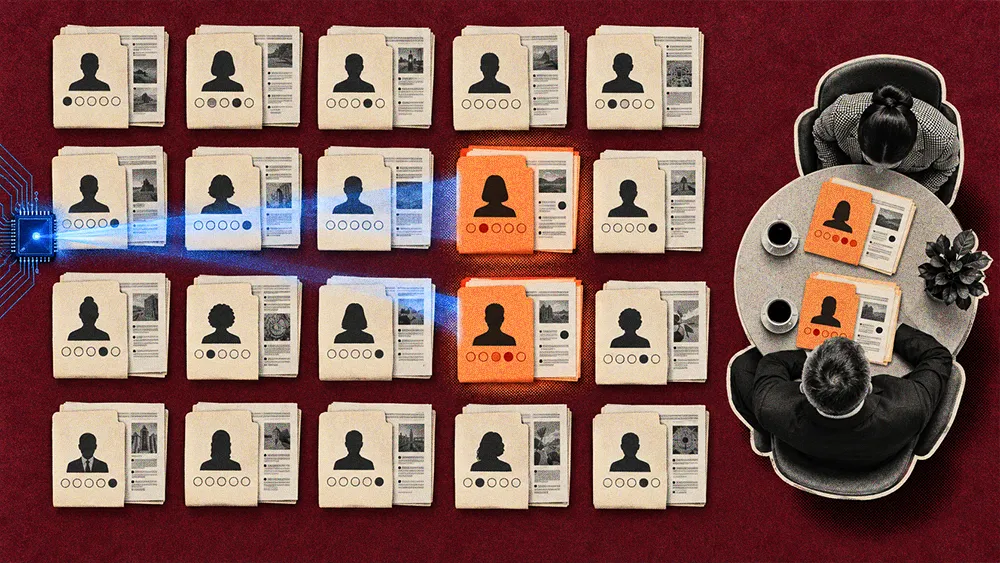


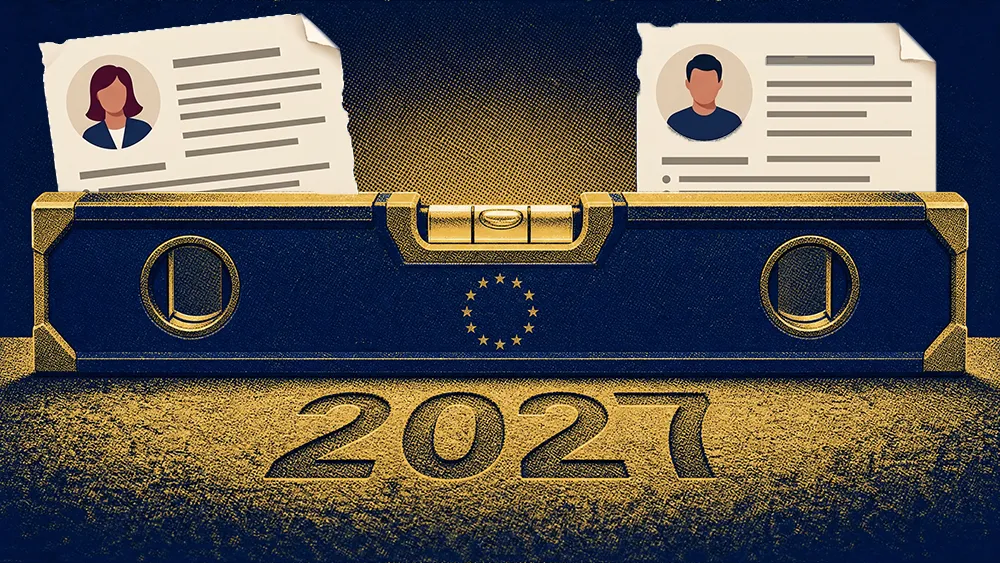
Europe moved the deadline and left the standard alone. The EU Council gave its final green light on 29 June to a simplification package that defers the compliance date for high-risk AI systems from 2 August 2026 to 2 December 2027. The EU AI Act took legal force on 1 August 2024, and its Annex III drops AI meant for "the recruitment or selection of natural persons" into that high-risk tier, the same category it reserves for tools that score credit or run critical infrastructure. High-risk status carries obligations for data governance, human oversight, and the ability to explain how a system reached a decision. Hiring teams won more than a year of breathing room and no change at all to what the law demands of an algorithm that filters applicants. In the eyes of European law, that algorithm is high-risk by default.
New York City has been living with a narrower version of the same idea since 2023. A company hiring in the city can only run applicants through an automated screening tool if an independent auditor has tested it for bias within the past year; a summary of that audit sits published where candidates can find it, and those candidates were told in advance. Those three requirements are Local Law 144, enforced since July 2023. The notice is owed ten business days before an automated tool reads an application.
Most teams file this under 'cost'. One more audit to buy, one more notice to post, one more reason hiring runs slower than anyone wants. Treated that way, the rules become a paperwork exercise that a legal team owns and a recruiting team resents. The rules are reaching for something else.
The questions underneath
Strip out the statutory language and both laws put the same short questions to a hiring team. Is the tool that screens candidates actually related to the job, and has anyone checked it for bias against the people it filters out? If a candidate, an auditor, or a court asks why it reached a given decision, can you give an answer that holds up? Those aren't lawyers' questions grafted onto hiring from outside. They're what separates a hire you can stand behind from one you got lucky on. Job-related, bias-tested, and explainable was the definition of a good screening method long before a regulator wrote it down.
The tools went mainstream and took the worry with them. Ninety percent of US employers now run AI screening tools that read résumés, rank applicants, and decide who a recruiter ever lays eyes on. A lot of those systems can't answer the questions above. They were bought to move volume, and their vendors often can't say which job-relevant trait a score reflects or how it performs across demographic groups. That gap is precisely what the rules turn into a liability.
Automation you can account for
Neither law bans automation. They draw a line between automation you can account for and automation you can't. The version that clears both is the one where the machine narrows the field and a person still makes the call, where every step traces back to something job-relevant and testable instead of to a score nobody can open up. It's technology a hiring leader can put their name on.
Walk your own funnel
For a talent leader, that turns the compliance project into something more useful than a checklist. The work is walking through the funnel and showing, at each automated step, that it relates to the job, that it's been tested for adverse impact, and that a human can read and defend what it produces. A team that can do that also hires better, because it stopped trusting signals it couldn't examine.
The rules landing on hiring look like constraints, and in the near term they cost time and money the way any constraint does. They also push in the direction good hiring was already walking, toward decisions built on evidence you can show. A defensible hiring decision has always beaten one you simply made, and the rules are finally writing that down.