

When you have a process documented and you can replicate it over and over again, it doesn't matter if a single person is here or not.
 David JacobsIndustrial Training Instructor & Consultant @ Industrial Solutions Network
A resume makes a candidate look like a sure thing, right up until the person starts and the team finds out what the page couldn't show. That gap only gets more expensive as a company grows, because scaling a workforce means reproducing what your best people know faster than any one of them can carry it, and most organizations learn too late that the knowledge was never written down. It lived in one person's head, and it left when they did.
David Jacobs is an Industrial Training Instructor and Consultant at Industrial Solutions Network by CED, based in the Lincoln, Nebraska area. He's spent more than two decades building training and workforce-development systems across manufacturing and healthcare, including training-manager roles at Hexagon Agility and HTI Plastics, where he cut onboarding time and stood up product certification programs. He came up through the work he now designs training for, starting on the production floor before moving into learning and development.
His fix starts earlier than most teams expect. Before anyone opens an applicant's file, the people doing the hiring have to settle what good looks like and agree on how they'll judge it. Clear standards, he says, are the foundation everything else sits on.
The resume shows half the picture
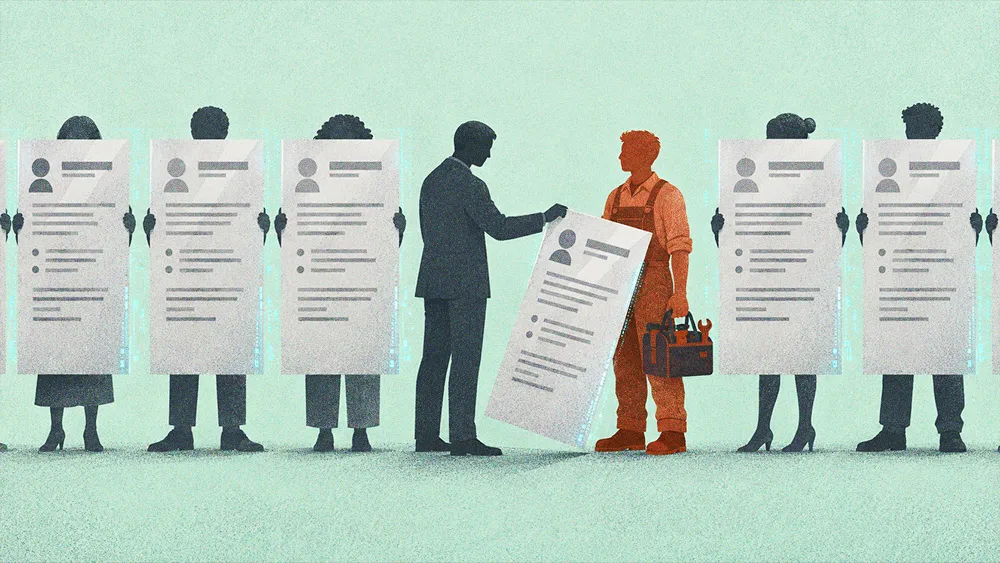
Jacobs isn't ready to write off the resume. He just knows its limits. "The background and the knowledge is what shows up on the resume," he says. "But that's only half of it." The document tells you whether someone has done the work. It says nothing about whether they'll fit the team, how they carry themselves, or whether they can teach what they know.
That second half only surfaces in conversation, and only when the interview is run with intent. Jacobs describes a call earlier in the week helping another region interview for a technical instructor role. Three resumes, one clear front-runner on paper, and a hiring manager who wanted a second opinion. His advice was to stop reading and start talking. "There are certain people who can do the job, and certain people who can't do the job but can train people," he says. They have a way of simplifying things for others that no line on a resume captures.
The cost of getting that read wrong is what makes the methodical version worth the time. "A bad hire is going to hurt you more than a good hire, and it's going to cost you more money in the long run," Jacobs says. It's a cost the resume's shrinking signal has only made harder to manage, as AI-written applications make the document easier to game and tougher to read. The research backs the instinct. Decades of selection studies point to structured, job-related questions as the single strongest predictor of how someone will perform, ahead of the resume and ahead of gut feel. Jacobs' version of structure is lower-tech but the same idea. Ask everyone open-ended questions, listen for the signals, and don't rush to fill the seat.
Take a load off Tammy
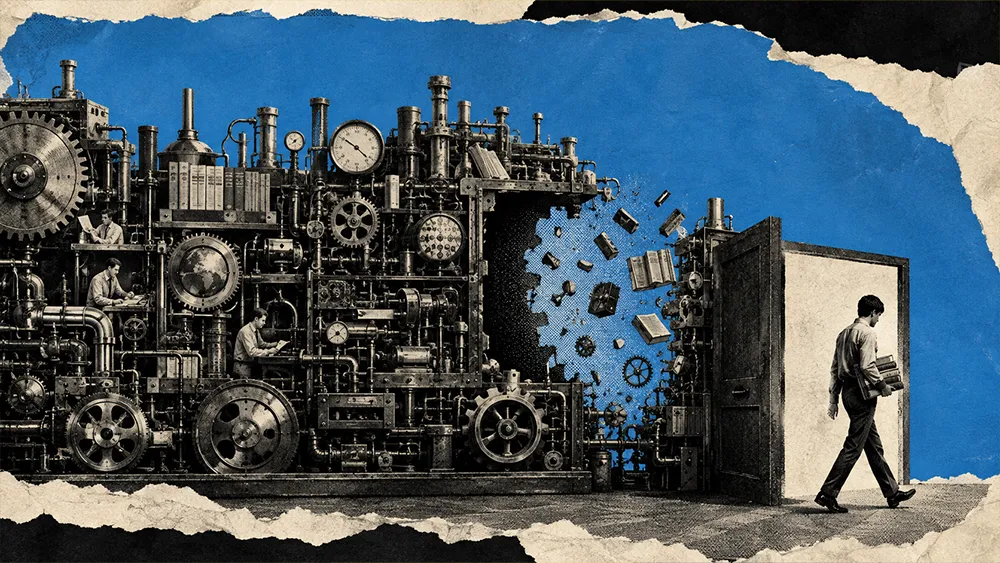
Jacobs likes to pose a question to the companies he works with. Could you replicate your workforce capability if you doubled in size tomorrow? For most, the honest answer is no, and the reason is almost always the same. "'Go ask Tammy, she's done it for the last ten years,'" Jacobs says, playing out a scene he sees constantly. "Well, if Tammy decides to leave, there's this huge gap, because nobody knows how Tammy did it." The capability was real. It just lived in one person's head, undocumented and impossible to hand off. When she goes, it goes with her.
The way out isn't reinventing the wheel. Write the process down, standardize it, and make it repeatable regardless of who's running it. "When you have a process documented and you can replicate it over and over again, it doesn't matter if a single person is here or not," he says. He points to franchises and big-box retail as the model. Walk into a Chick-fil-A or a Midwest grocery chain and you know what to expect, because the experience has been built to reproduce itself in any location, in anyone's hands. Manufacturing, the world he lives in, has been slower to get there.
The stakes aren't abstract, especially in industrial work. Manufacturers are staring at manufacturing's widening talent gap, with as many as 3.8 million roles to fill this decade and nearly half of them at risk of going unfilled. A company that can't document and transfer what its best people know can't scale into that gap. It can only keep hoping Tammy stays.
AI runs on foundations you've already built
Bring up AI and Jacobs reaches for a hammer. "AI is a tool. It's all about how we use this new tool," he says. He uses it daily, and the example he offers is telling. He fed his organization's full course catalog and training materials into a model and asked it to find the gaps, the duplicates, and the themes he'd missed. "AI is really good at seeing patterns," he says. Minutes later he had an analysis that would have otherwise taken days.
The model was useful because Jacobs already had the catalog, documented and in one place, to feed it. The pattern-finding ran on top of a foundation that already existed. Point a model at knowledge that still lives in Tammy's head and there's nothing for it to read.
That disconnect is showing up across the economy. AI is now widely adopted, rarely scaled. Most organizations have deployed it somewhere, yet the majority report little bottom-line impact and haven't moved past the pilot stage. Teams tend to stall when they automate on top of undocumented, inconsistent process. In hiring, the same logic holds, which is why the sharper move is the groundwork any tool needs rather than switching a given system on or off. The tool amplifies whatever it's pointed at. If the underlying work is a mess, AI scales the mess.
Capability is a retention strategy
Jacobs' through-line lands on people, not process. Building capability is expensive and slow, and he argues it pays back twice. Once in a workforce you can replicate, and again in one that wants to stay. "If you are going to double the size of your business, you've got to take the time and the effort to invest in employees," he says.
The connection to retention is direct. When a company puts real money and time into someone's development, that person reads it as the organization caring about them, and loyalty follows. The alternative shows up as churn, and a large share of it starts before the exit interview, in a first year that never got a real onboarding or a reason to stay. The broader data agrees that development keeps people longer. Employers now name learning opportunities their top retention lever, and workers who can advance in place are measurably less likely to leave.
Be the destination
Jacobs' closing advice to employers is simple and hard. "Be the destination. Be the employer people want to go work for," he says, the one known for developing its people. In a labor market where everyone is scrambling for the same skilled workers, a company that can build capability, document it, and reward the people who carry it doesn't just fill roles faster. It becomes the place they don't want to leave.