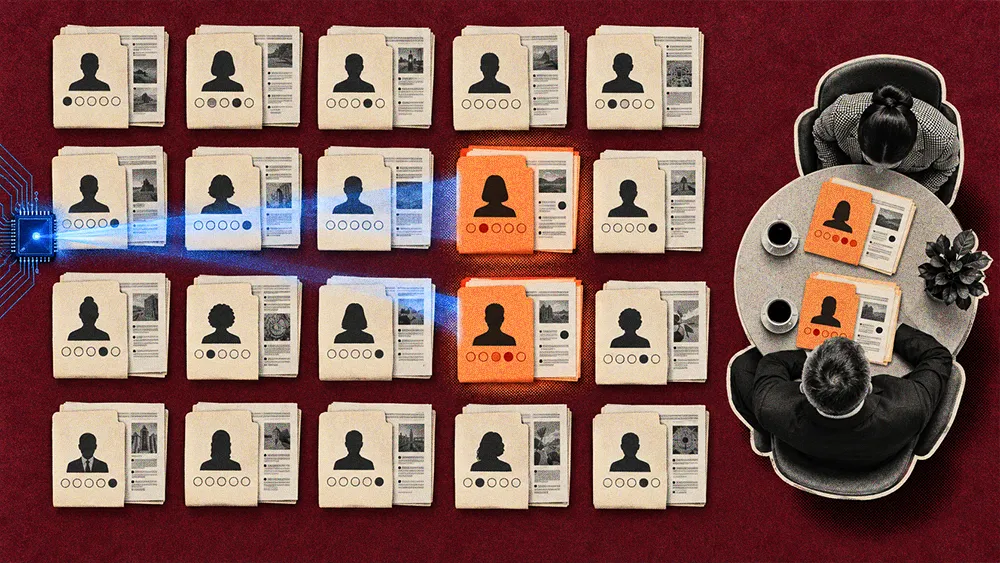


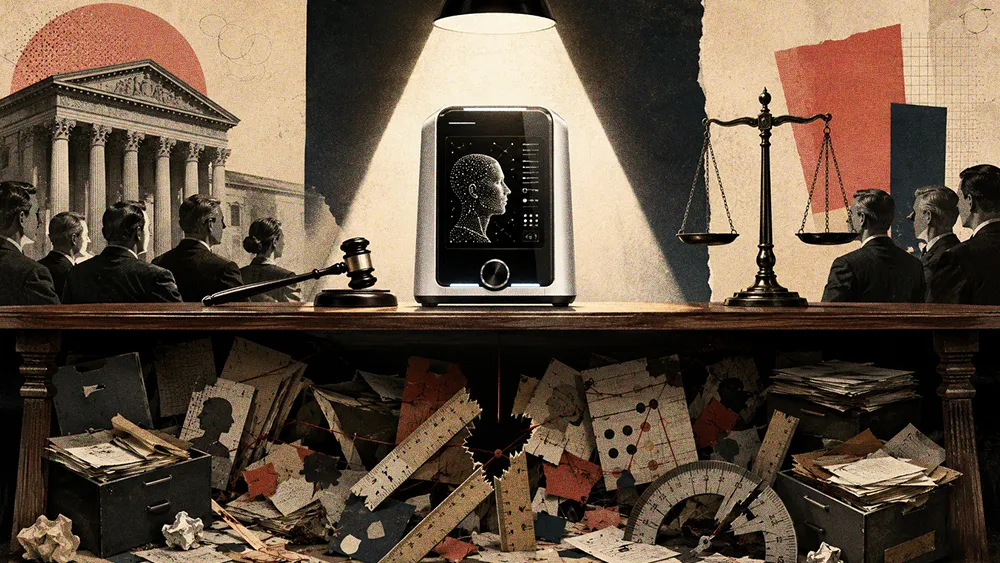
A federal judge in San Francisco has let most of Mobley v. Workday move forward, ruling the vendor has to answer for AI screening tools that applicants say rejected them for being older, Black, women, or disabled. For a lot of talent teams, a headline like that reads as a verdict on the technology itself, and the first question it sets off is whether to keep using AI to hire.
Emlyn De Leon, who leads workforce capability and skills transformation at USAA, wrote on LinkedIn that this is the wrong reflex. The headlines, she wrote, "shouldn't prompt organizations to ask, 'Should we stop using AI?'" She turns the question inward. "The better question is: 'Have we built the workforce capability foundation that enables AI to support better decisions?'"
As good as what's underneath
Her argument is that the tool at the center of the case is only ever as good as what sits underneath it. "AI can only be as effective as the workforce data, capability definitions, and operating practices that support it," she wrote. A screening model learns its idea of who's qualified from a company's job descriptions, its records of who worked out, and the standards behind both. Point a capable model at muddled inputs and it reproduces the muddle at scale, which is roughly the fact pattern a court is now examining.
De Leon asks whether that foundation exists, and she lists what a team should be able to answer before it blames or trusts any algorithm. "Are our job requirements clearly defined? Are workforce capabilities and skills consistently structured? Are proficiency expectations standardized? Are assessments aligned to the actual work? Can we explain how AI-supported workforce decisions are informed?" A team that can answer yes has something to stand on. A team that can't has been handing judgment to a tool and hoping.
Most foundations aren't built yet
For most companies the honest answers are "not yet," and the reason is that nobody funds a skills taxonomy. Take the second item on her list: whether skills are consistently structured. Only 38% of organizations keep a single, enterprise-wide skills library, up from 30% in 2023, and 55% map skills directly to the jobs that need them, according to Mercer's 2025/2026 Skills Snapshot survey. When the skills data is that fragmented, an AI tool built on top of it reads from a record that doesn't agree with itself, and no amount of model tuning fixes a definition problem.
De Leon's reframe points at the work most of the AI-in-hiring debate skips. The way to make an AI-assisted hire defensible is to build the validated, job-related, explainable base that would make any hire defensible, the base that has always separated a good hiring decision from a lucky one. "Technology alone will not create a skills-powered organization," she wrote. The tool can widen the set of signals a team gets to see. Whether those signals lead anywhere better depends on the evidence and the judgment a company brings to reading them.
Widen the signal, keep it honest
That lands on the position the loudest reactions skip past. One camp pulls the plug after somebody else's lawsuit. The other waves the score through because it arrived fast. AI to widen the signal, a validated evidence base to keep it honest, and a person accountable for the call. The case turns on a piece of screening software, and the answer it should send talent leaders toward is the slower discipline of saying what a job requires and being able to prove it. That's what a good hire always came down to.