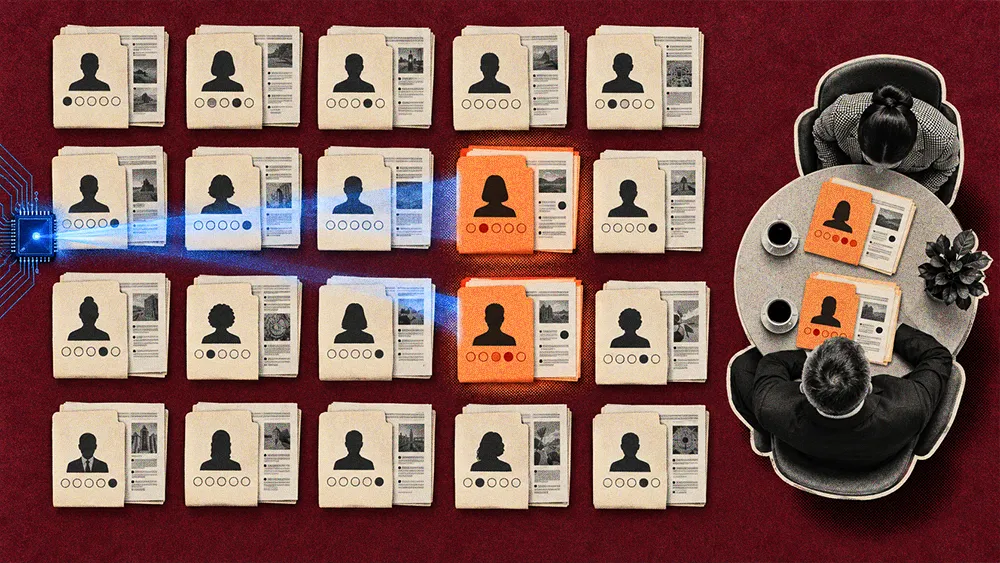




Being faster doesn't do us any good if it doesn't translate into some sort of business result. Does it reduce attrition? Does it increase the quality of candidate that we're getting on board? Are recruiters better equipped to find better talent?
Companies have never used more AI in hiring, yet rarely have they been less able to say what it bought them. Adoption has crossed the majority line and optimism is high, but a striking share of leaders say the tools haven't delivered anything the business can actually feel. The usual explanation is that the technology is overhyped. A simpler one is that teams bought it to go faster, got faster, and then discovered that speed on its own isn't a result any business leader was asking for. Optimize for the wrong thing and you'll hit your target while having nothing to show for it.
Confronting that problem is Karin Wagner, Vice President of Talent Operations and Technology at Empower Pharmacy, where she leads how the talent function buys, builds, and measures the systems its recruiters run on. For a field that tends to sell AI on acceleration, her assertion is blunt, and it started with a question she couldn't answer.
"Being faster doesn't do us any good if it doesn't translate into some sort of business result. Does it reduce attrition? Does it increase the quality of candidate that we're getting on board? Are recruiters better equipped to find better talent?" These are the questions Wagner believes should drive an AI purchase, and she started asking them after a challenge from her own leadership.
The question that broke the speed habit
The reframe came from a conversation with her own chief talent officer when Wagner was making the case for an AI tool the way most people do, by pointing at how much faster it made things. "He said, 'Why does the business care about that? I get speed for speed's sake, but why does the business care?'" She didn't have a clean answer, and that was the point. The question sent her looking for what a business leader in manufacturing or customer success would actually recognize as a win, and it was never the speed itself. "They don't actually care that my speed is faster," she says. "They care that the metric will hit their bottom line in a positive way."
That gap between what TA measures and what the business values is, in her telling, the reason AI keeps disappointing. It's worth noting how widely the disappointment is felt even as optimism runs high: in Criteria's 2026-2027 Hiring Benchmark Report, which surveyed more than 1,000 hiring professionals, 66% said they believe AI tools deliver a high return on investment, a confidence that sits precariously next to how few teams can name the business result behind it.
Why so many teams fall into the speed trap
Wagner is candid that the trap is easy to fall into because speed is simply easier to talk about than value. "It's hard to translate AI's impact into something a business would understand. Even now, as I'm trying to describe it, I keep coming back to the speed thing, like 'It'll make my recruiters more efficient.' Well, efficient at what?" The honest version, she argues, forces a harder question. "Do I generate more candidates that are higher quality sooner, that a business cares about? Are they going to quit less often? Do they cost me less because I sourced in a different location?" Those translate. 'Saves my recruiters five hours at the end of the day' does not.
The benchmark data hints at the same instinct spreading across the field. Asked to name their top priorities for the year ahead, hiring professionals ranked embracing AI seventh, behind upskilling, efficiency, retention, and cost, which the Criteria report reads as a sign that AI is becoming "a means to an end rather than a goal." The teams that get value, in other words, are the ones that have stopped treating the tool as the goal in and of itself.
Where the hours actually went
Wagner’s own proof starts with a number, but she's quick to note that the number isn’t the point. AI gave her team back roughly 900 hours, and the value wasn’t the hours, but where she put them. "That time went into more talking with the hiring managers about the candidate profiles and who the right fit was," she says. The team used to present six or seven candidates per role to a hiring manager, and now it's more like one to three. "We're getting better at screening talent because we've spent more time actually evaluating the talent, instead of just combing through resume after resume after resume." The reclaimed time went into the judgment-heavy work the volume had been crowding out, and it produced a result a hiring manager can feel directly. "They're getting three hours back in a week because they've only had to interview three candidates instead of six."
That shift from doing more of the same, faster to doing the higher-value work at all, is exactly the move the resume's decline is forcing on everyone. The benchmark report found that about a quarter of hiring professionals have lost confidence in the resume as a reliable signal, and 41% now contend with candidates using AI to misrepresent themselves. When the document can no longer be trusted, the hours a recruiter used to spend reading them are better spent evaluating the person, which is precisely where Wagner redirected them.
The reclaimed time doesn't allocate itself, and Wagner is emphatic that leaving it to chance wastes the gain. Left undirected, she says, her recruiters might simply have reviewed more resumes, more of the same low-value work. The TA leader's job is to point the time somewhere that matters, and to use measurement to do it.
Her team drove the reinvestment by reporting on a specific metric they wanted to move: candidates sitting in a stage for more than seven days without contact. "We directed where our recruiters spent time by reporting on a specific metric we wanted driven down," she says, and they cut it by nearly 40%. The effect showed up where the business could see it, in the candidate experience. "Candidates were no longer saying in their comments, 'I've been ghosted,'" she says. "They shifted to, 'I want to hear about the next step in the process.'" The benchmark data frames why that matters: 70% of hiring professionals say they've been ghosted by candidates, and the report argues the dynamic is circular, that better candidate communication "can be a competitive differentiator" rather than just good manners.
What to ask a vendor when everyone sells speed
The same confusion that makes teams buy AI for speed makes them easy to sell to, and Wagner has started grading vendors on whether they resist the pattern. Of five vendors in a recent evaluation, only one opened the right way. "One of them asked, 'What's the business ROI you're trying to drive?' and that's how they started the conversation," she recalls. "I really ranked this vendor high, because that's exactly the conversation I want to have." The tell she looks for is a vendor asking about the problem rather than demonstrating a feature.
Beyond the opening question, Wagner wants evidence of an innovation roadmap, a serious answer on bias and compliance, and a genuine grasp of the buyer's business. "So many times we go into a vendor demo and they don't even know what our company does," she says, describing pitches built for the wrong industry. The partnership, in her view, is part of the product.
Know your own state before you buy anything
Wagner's closing caution is that the vendor is often not the fix at all. Sometimes the problem is a process or a training gap, and no tool will touch it. The only way to know is to understand your own operation before a demo starts. "If you don't know your current process and technology, documented as it is today, before you go into those vendor demos, every vendor is going to be able to persuade you of something amazing, because you don't even know your own current state," she advises.
The discipline she prescribes is to define the future state first, then measure vendors against the gap. "So many times it sounds great because it is a great solution. It just might not be the solution for you." The questions that follow, like whether the gap is really a technology gap or a process-and-training one, can only be answered by a team that knows what it already has and what it's trying to become.