

As AI Floods The Hiring Process, Candidates’ Own Work Becomes A Strong Signal
Checkmate's Nina Barden on candidates who go around the ATS and the interview process her team built to find the person behind the AI.
Take your time interviewing candidates. In the end, they respect the process more for it.


If this caught your attention, that’s not accidental.

The best editorial systems don’t happen by accident. Outlever builds them.


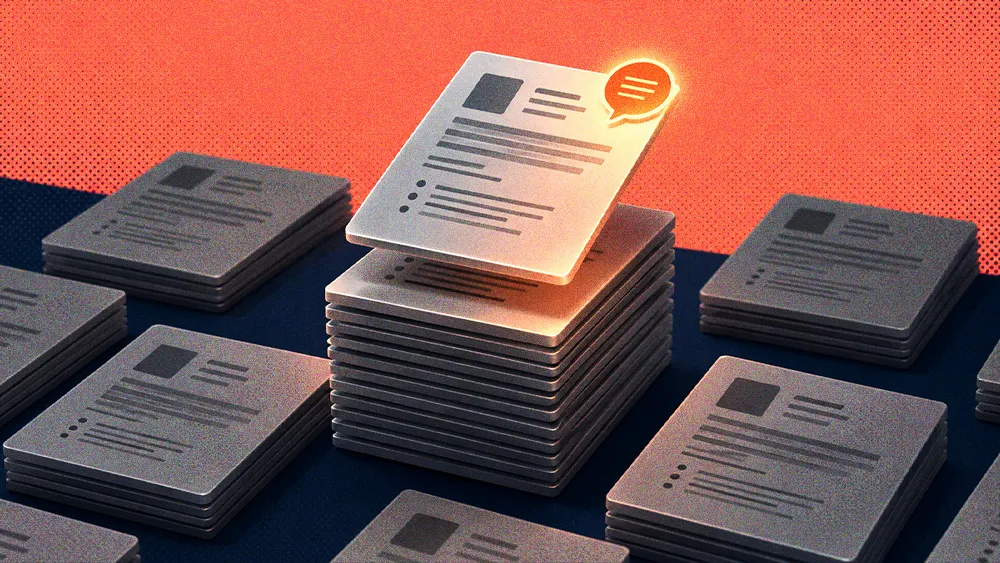
When Checkmate posted an opening for a senior product manager, applications ran into the hundreds. That volume is part of a broader surge that AI auto-apply tools have helped fuel across tech hiring. A few candidates applied through the official portal like everyone else and then kept going. They built slide presentations about what they could bring to the role and sent them to the company's head of People on LinkedIn, and one drafted a product strategy roadmap and sent it straight to the CEO.
Nina Barden is the SVP of People at Checkmate, a fully remote company that builds digital ordering technology for restaurant brands. She joined Checkmate after leading human resources at Optimizely. Her job now includes figuring out how to evaluate candidates when the application itself has become harder to verify.
For engineering and tech roles, Barden estimates that one in four resumes Checkmate receives are fake. That makes the resume a starting point, with proof of experience coming later in the process. The candidates who create a second signal around the formal application, a deck in her inbox or a roadmap on the CEO's desk, give her evidence of how they think and what they can do. "Candidates still apply because they're checking the box," she says. "But are the ones who game the system and take that extra step to find us now the ones who rise to the top of the pile?"
A confidence score flags fake resumes
To sort the volume, Barden's team built an internal agent in Claude that assigns each resume a confidence score reflecting how likely it is to be real. The tool is one layer of a screening process that also includes pre-screening questions asking candidates for specific examples from their work. "When you put in real-life, real-world examples, that will counter what potentially could be fake, because it's not something that's already out there on the internet that someone else has already used," Barden says. The agent draws on a deep pool of published content, she says, which helps it flag material that was probably "copied and pasted from somewhere else."
Even as employers find the resume harder to trust, Barden sees plenty of value left in it for candidates who fill it with their own work. A strong resume "will allow them to stand out and show very specific projects or accomplishments or achievements, or what did they drive revenue for within the company," she says. The version that has run its course is the one assembled from the posting itself. "If you are simply copying and pasting a job description to your resume, in that sense, it's dead." Candidates who skip the slide deck and apply the conventional way still have a clear path, as long as the resume shows work only they could describe.
Interviewers probe each resume project
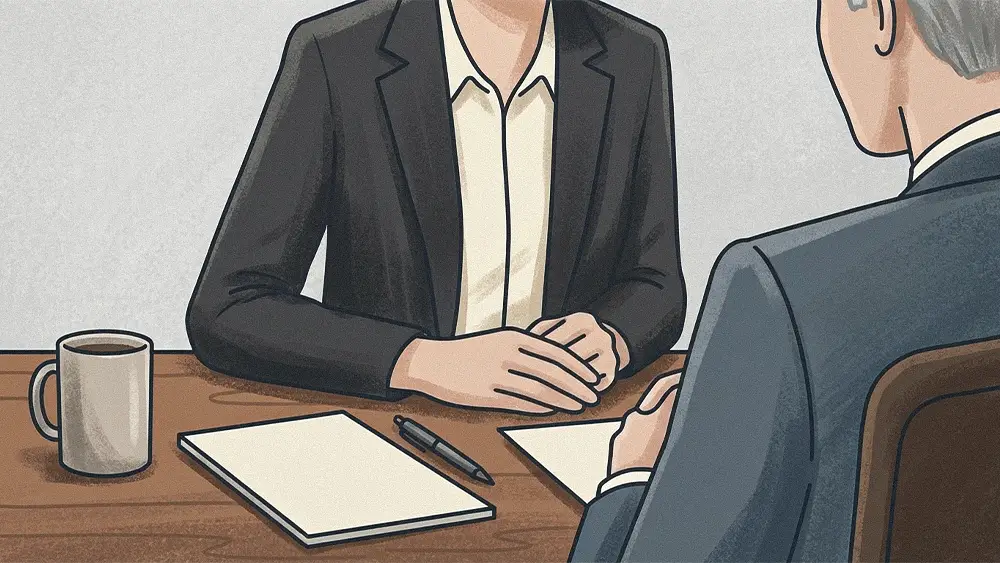
Checkmate takes a human-first approach to interviewing, starting with a talent acquisition screen that covers behavioral and skill-based questions. "Underneath the answers, we're watching how candidates behave and how they treat the interviewer," Barden says. "We want to see whether they ask questions back and how engaged they are in the conversation." Later rounds, still on video, look at whether candidates have done their research and can come back with follow-up questions of their own, and a project or skills test asks them to explain how they approached the work.
With consumer tools now able to build an interview-ready fake in about an hour, Checkmate trains its interviewers on the tells of AI-assisted answers. "We can tell when someone's answering a question via AI," Barden says. "On our screen you can see them reading, or the way they speak is very scripted." She describes it as a new layer of evaluation. "In addition to skills and behavior, now you're looking for this third component."
Hiring managers widely suspect AI in interviews, and Checkmate meets that uncertainty with preparation. Before each interview, hiring managers pick specific projects from the candidate's resume and write follow-up questions about how the work got done. "How did it turn out? Or, when you were on step three, what did you do next?" she says. A candidate who relied on someone else's work tends to reveal it. "If their answer was, oh, I relied on Bob from product to give me the PowerPoint deck on how I could approach this, then you know that they probably didn't dig in and do it themselves."
Hiring managers welcome candidate AI use
Checkmate trains hiring managers to "pull back the layers of what they think, how they think they should be responding, to learn how they will act on the job," including how candidates approach problems and handle conflict. Barden expects employees to use AI once they're hired, so the interview focuses on whether a candidate can explain and own the work.
When a manager notices a candidate using AI along the way, the guidance is to say so openly and keep the conversation moving. "They'll lean in on that and say, hey, that's okay, because when you come on board, we expect everyone to be leaning on and using AI for a good majority of their job," Barden says. That makes AI use itself less interesting to the interviewer than what happens after the tool produces an answer. "Who are you? How can you now show us who you are?"
Employers have struggled to tell 2026 graduates apart on paper, yet Barden finds that recent graduates often handle this moment well. "They're living in AI, that's all they know," she says, and she sees many of them keep their own voice while using the tool for support. Her advice to candidates of any age is to "be you, and then use that to help support you."
Checkmate accepts a slower process
Barden's answer to candidates who use AI to slip past screening software sits with the software itself. "If you're worried about candidates gaming your filters, the fix is getting a better filter," she says. Every company needs an ATS to keep up with application volume, in Barden's experience. "If you don't play the game, you're going to get buried," she says. The ATS handles the volume, while the rest of the process has to establish whether there is a person behind the application who can do the work.
Hiring has slowed into what economists have called a hiring recession, and Barden says the roles companies do fill are "strategic," which makes them worth the extra interview time. "Interviews will not move as fast, but I don't think candidates are expecting that as much anymore," she says, since candidates know they need to bring AI skills and a strategic approach to the role at any level.
Somewhere in that pile of hundreds, one candidate built a slide deck for the People team and another sent a roadmap to the CEO, each handing Checkmate more of their own work to evaluate. "Take your time interviewing candidates," Barden says. "In the end, they respect the process more for it."

Criteria reveals how candidates think, work, and grow, turning potential into more confident hiring decisions.


Come for the news, come back for the signal.
Subscribe for the ideas, shifts and stories shaping how talent gets found, understood and hired.