

Ask employers whether a resume still tells them what a candidate can actually do, and most of them hesitate. In a 2026 Criteria Corp survey of 998 employers, only 33 percent said they're very confident that resumes reflect a candidate's true skills. Two-thirds said they've already hired someone who misrepresented what they could do. The document that sits at the front of almost every hiring process has become the one hiring teams believe the least.
The lazy read is that resumes got worse, that people padded them harder or lied more than they used to. That isn't quite it. A resume was never a strong signal to begin with, since a page of self-description has always been a rough stand-in for whether someone can do the work. What actually changed isn't the honesty of the paper. It's that AI hit the resume from two directions at once, and neither of them is about any single applicant getting more dishonest.
Applying became nearly free
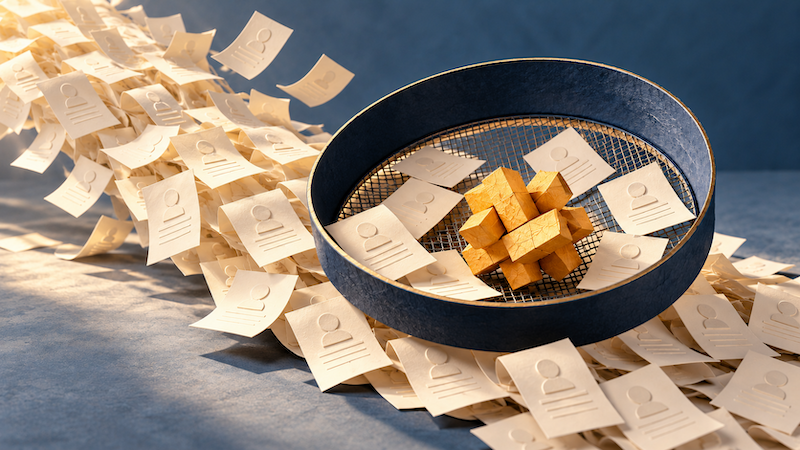
The first direction is sheer volume. AI made applying nearly free, so a job seeker can now generate a tailored resume and send it to a hundred openings in the time it used to take to write one cover letter. The counts show it. LinkedIn users submit roughly 11,000 job applications every minute, as eWeek reported from the platform's own data. That flood lands on the same recruiters who then have to read it, and a resume that arrives buried in ten thousand near-identical others is worth less for reasons that have nothing to do with what it says.
The resume learned to beat the filter
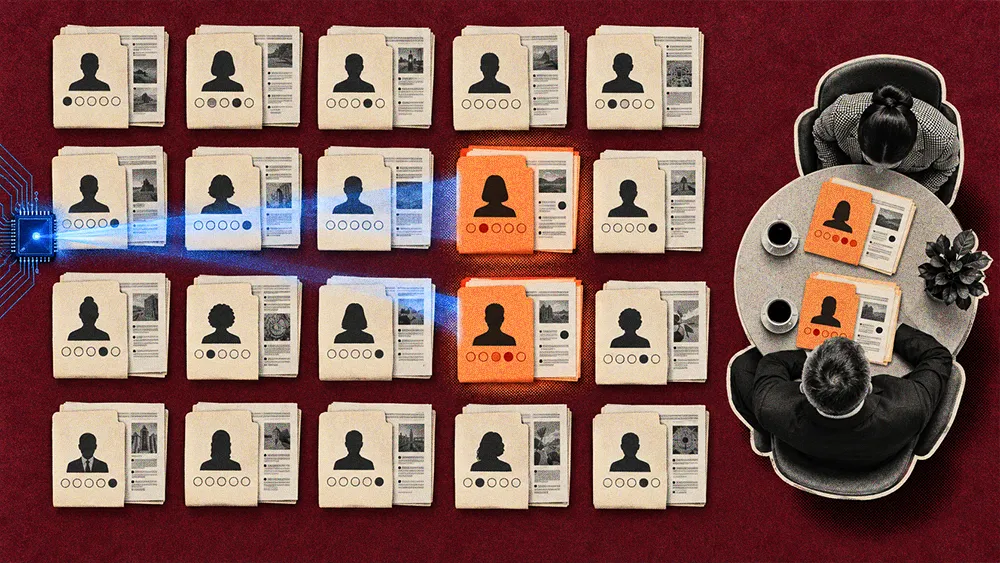
The second direction is that the resume became optimizable. The same tools that write it are tuned to beat the software that screens it, and job seekers know exactly what they're doing with them. Of the more than 1.2 million people who used AI-powered job-search tools last year, about 64 percent used AI to check their resumes against applicant-tracking systems, which made gaming the screener the single most common thing they did with it, ahead of actually writing the résumé. Once a document is engineered to clear an automated filter, clearing the filter stops telling you much about the person behind it.
Put volume and optimization together and you get the trust collapse the Criteria numbers describe. The problem isn't that any given resume got more dishonest, it's that hiring teams can no longer separate the signal from the noise, because the noise now looks exactly like the signal and there is far more of it. SHRM, reporting on a hiring market it calls broken, puts the scale plainly. AI-enabled mass-application services have taken some employers "from thousands of resumes a month to thousands a day", and an estimated 40 to 80 percent of applicants now lean on AI to produce the pages. When the stack grows that fast and every page reads as polished, getting more applications hasn't given employers more to work with, it's given them less.
Where the signal moved
So the signal is moving off the paper and toward things that are harder to fake. The same Criteria survey found that employers now trust assessments, structured interviews, and work samples more than the resume, with 98 percent rating those methods as better evidence of what a candidate can actually do. None of that means the resume is dead or that software is making the call. It means the resume gets demoted from evidence to a starting point, and the weight shifts to methods the candidate doesn't get to write and to the judgment of the people reading them. A structured interview scored against a set rubric tells a hiring team something a generated document can't. So does a work sample pulled from the actual job, or a validated read on aptitude. What they have in common is that the applicant can't author the answer in advance.
The resume didn't lose its value because people got worse at writing them. It lost its value because everyone, and everything, got better at it, until a flawless one stopped saying anything about the person who sent it. The hiring teams pulling ahead already know the signal was never really in the paper. They've gone looking for it where it actually lives.