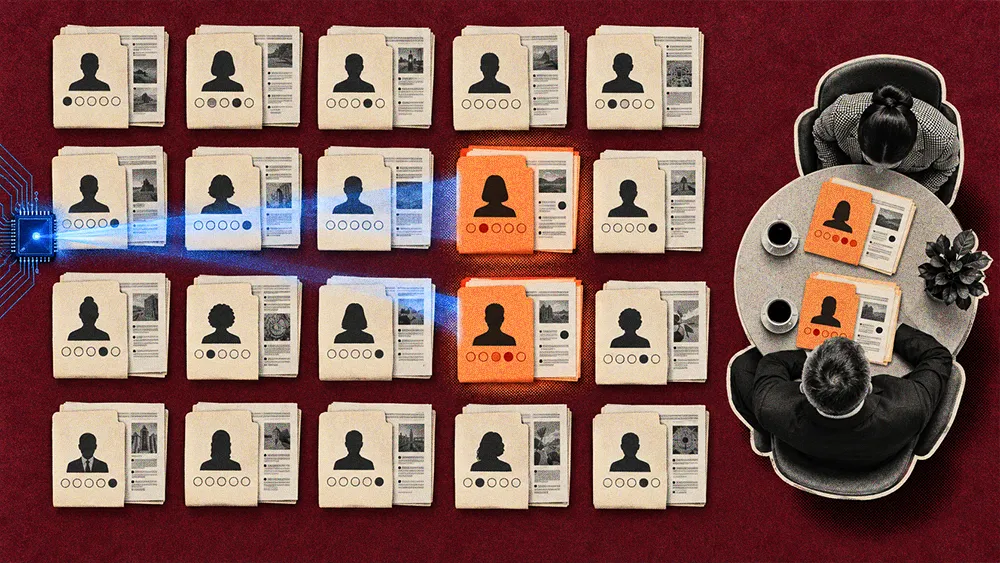



Ninety-one percent. That's the share of American hiring managers who told a 2026 Greenhouse survey they had encountered or suspected AI-generated answers during online interviews. The same research finds misconduct signals in online hiring up more than 30 percent year over year. On the candidate side, a Gartner survey of 3,000 job seekers finds 6 percent willing to admit to outright interview fraud, either sending someone in their place or standing in for someone else.
Stay with that first number. When 91 percent of the people running interviews believe the answers they hear may have been written by software, the interview has stopped functioning as a measurement. It has become a formality both sides perform while privately doubting the results.
The say-do gap, measured
Here's the strange part: behavior has barely moved. The same organizations reporting suspicion at near-universal rates are, by and large, still running the same funnels. Resume screen, recruiter call, hiring manager interview, offer. The instruments everyone distrusts remain the instruments everyone uses.
This gap between belief and practice is the defining feature of hiring in 2026, and it shows up wherever anyone bothers to measure. Criteria's research with Lighthouse Research & Advisory finds employer confidence in resumes falling sharply even as resume screening remains the default first gate. Confidence collapses. Process persists. The industry has diagnosed its own condition and declined the treatment.
Candidates are paying for the stalemate too. As suspicion rises without process change, the default response is more scrutiny applied through the same weak instruments: extra interview rounds, surprise camera checks, gut-feel rejections of anyone who sounds too polished. Applicants who never touched an AI tool now get filtered out for seeming rehearsed, while sophisticated cheaters sail through on tells no human reliably catches. Distrust without measurement punishes the honest at random. That's the current state of the market.
Why nobody moves
The honest explanations are mundane. Processes are wired into systems that took years to implement. Recruiters are measured on speed and volume, not predictive validity. Nobody gets fired for running the same funnel as everyone else. And skepticism, on its own, doesn't supply an alternative. Believing the resume is noise doesn't tell you what signal to use instead.
That last problem is solvable, and has been for decades. Validated assessment of cognitive ability, personality, and job-relevant skills consistently outpredicts both resumes and unstructured interviews, a finding the selection literature has replicated so many times it's barely news. What is news is the collapse of the alternatives. When the resume could be trusted a little, the switching cost felt optional. Now that 91 percent of hiring managers doubt what they hear in the interview itself, the cost of standing still is the one growing fastest.
The gap between what hiring leaders believe and what they do isn't sustainable. Either confidence recovers, and nothing about AI's trajectory suggests it will, or practice finally catches up to belief. The organizations that move first will spend a few uncomfortable quarters rebuilding their funnels. The ones that wait will keep interviewing software and calling it diligence.