


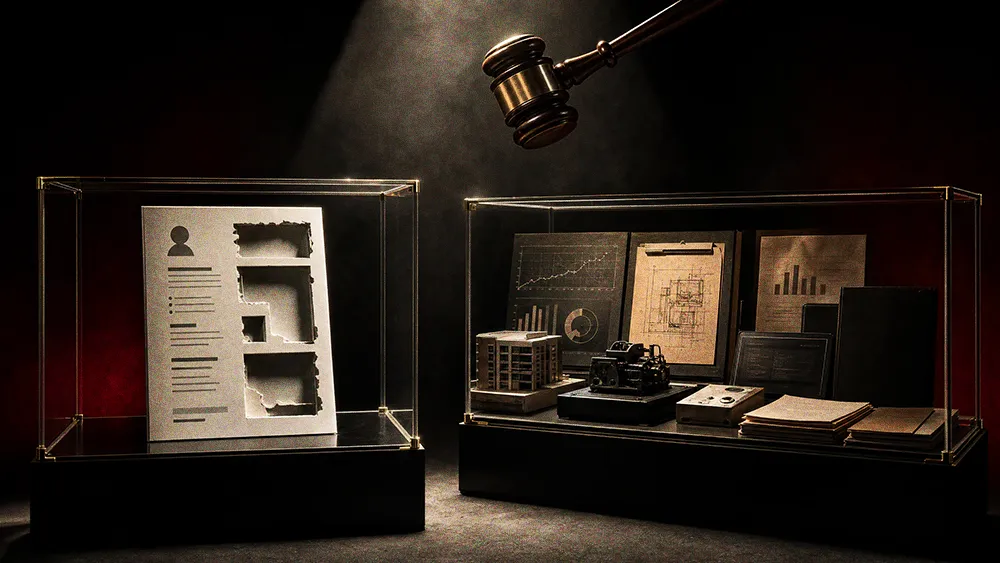
Rich Moore has spent more than fifty years hiring leaders, everything from assistant managers to C-suite executives to nuclear power and surface warfare officers for the US Navy, and lately he can't trust the paper in front of him. Even at the mid six-figure level, he wrote on LinkedIn, the resumes crossing his desk read as "meandering collections of buzzwords strung out in run on sentences" with no concrete results behind them. Moore, who now recruits for Kaweah Health in Visalia, California, blames the obvious culprit. "The resumes are generically created by AI containing some actual skills but no actual results," he wrote. "It is becoming increasingly difficult to evaluate candidates and even trust the content of their resumes."
The signal collapsed
It's tempting to read that as candidates getting lazy or the talent pool thinning, but the real problem sits a level higher. Jer Langhans, a longtime sourcer, sees the same collapse from the recruiting side. Hiring right now, he said, "isn't suffering from a talent shortage. It's suffering from a signal shortage. Too many applicants. Too many tools. Too many interviews. Too little clarity." The resume used to be a cheap proxy for a person. Now that 29.3% of job seekers use AI to write or customize a resume or cover letter, up from 17.3% a year earlier, the proxy has stopped carrying much about the person at all.
More rounds, more confidence
When a signal degrades, the reflex is to pile on more of it. Another interview round, a second panel, a take-home exercise, a gut check from whoever is most senior in the room. Konstanty Sliwowski, a human capital strategist who wrote a playbook on interviewing and says he's run more than 12,000 interviews, spent years learning what that reflex actually buys. One hire "looked perfect on paper," he wrote. "Great interview. Confident. Likeable. Everyone around me agreed." Six months later the company had "lost time, money, and momentum." The failure traced back to a decision built on a feeling. He'd "hired the person I wanted them to be," he wrote, when "the business needed someone else entirely."
Deciding on outcomes
That's the correction the loudest reactions skip over. More rounds and more consensus don't repair a decision that was never anchored to anything, they just add cost and confidence to it. Sliwowski's answer, in a post that drew more than 1,200 reactions, was to pull the decision off instinct and onto evidence. "Define success before you start hiring. Assess people on outcomes they deliver. Hire based on facts not feelings." Say what a good result in the role looks like before you meet a single candidate, then weigh what each person has actually delivered against that definition rather than against how the interview felt.
Saying it versus doing it
The hard part is that deciding on facts is far easier to post than to practice. The industry already ran a version of this experiment. When employers announced they were dropping college-degree requirements to hire on skills instead, a joint Harvard Business School and Burning Glass Institute study found the change reached fewer than 1 in 700 new hires, and for most companies the new policy rewrote the wording of a job posting and nothing about who got the job. Declaring a standard is not the same as measuring against one. The definition of good has to be concrete enough, and the follow-through disciplined enough, that the evidence can actually overrule the gut.
The resume was always a weak signal. AI just stripped the last cover off a document that was never carrying what everyone pretended. The three of them are describing one problem from three seats. Moore can't trust what the paper says, Langhans has more inputs than ever and less clarity than before, and the fix Sliwowski keeps circling back to is the least exciting one, knowing what a good outcome looks like before anyone walks in the door. The candidates were always this hard to read. Hiring just ran out of room to skip defining what it was reading for.