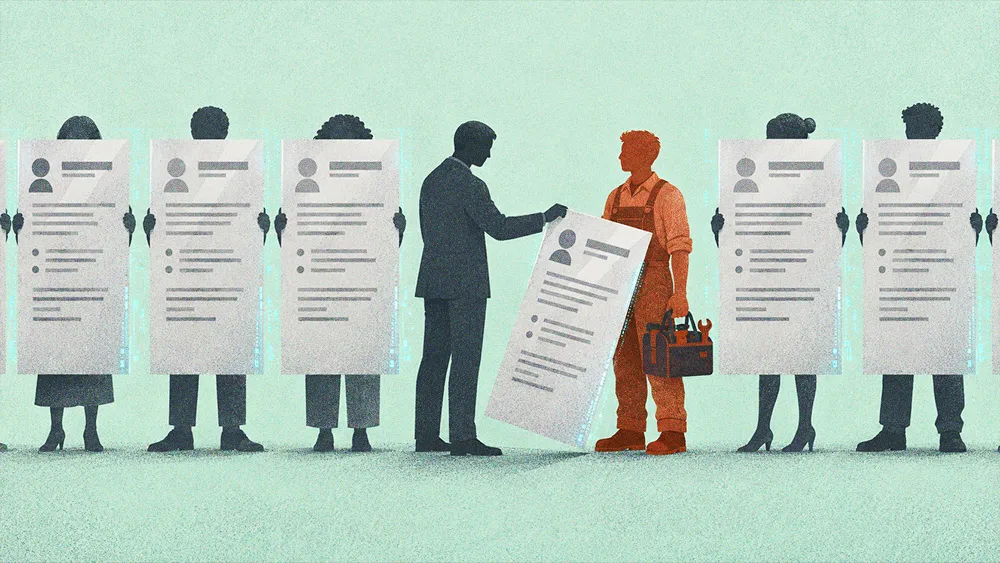



Most postmortems on a bad hire land on the same verdict: the team moved too fast. Scott Bonacorsi, chief people officer at Rehmann, a US accounting and wealth-advisory firm, wrote on LinkedIn that the verdict is usually wrong. "Hiring mistakes usually don't happen because companies move too fast," he wrote. "They happen because the hiring process isn't clear enough."
The reflexive fix for a bad hire is to slow the process down, add an interview round, insert another approval, stretch the timeline. That treats speed as the defect, when the real one is that nobody in the room can say what the role is supposed to produce. Bonacorsi puts the real work earlier than most scorecards do. "Define success before you post the role," he wrote. "If the team can't agree on what a good candidate looks like in the first 90 days, it's much harder to choose the right one." The disagreement he's describing rarely announces itself as disagreement. It shows up as a job posting that lists ten requirements and ranks none of them, and four interviewers who each walk in optimizing for a different one.
The default signal
When the definition is missing, hiring falls back on the most visible thing in the pile: the resume. It's the easy signal, and a weak one, because a document a candidate wrote about their own past mostly rewards whoever describes that past well. What makes this strange is that talent teams already know which target counts. Quality of hire is the outcome they rank first, named the top measure set to reshape recruiting over the next five years in LinkedIn's Future of Recruiting research, and the one they admit is hard to measure. A team that never defined a good hire can't measure one, and it can't reliably choose one.
What actually predicts performance
Bonacorsi's own read of a candidate points away from the paper. "Hire for fit and follow-through, not just experience," he wrote. "Strong resumes matter, but consistency, judgment, and communication often tell me more about long-term success." The research runs the same direction. When Paul Sackett and colleagues re-examined decades of selection studies in 2022, structured interviews came out as the single strongest predictor of on-the-job performance, at an operational validity of .42, well ahead of even cognitive-ability tests at .31. It's a result the Society for Industrial and Organizational Psychology called "a reason to rethink the field." What makes an interview structured is exactly what Bonacorsi asks for up front: an agreed definition of success and the same evidence gathered against it for every candidate. This is where the current wave of hiring software earns its keep. It can help draft that definition, hold the questions consistent, and keep the notes comparable across a stack of applicants no human can read closely. It can't decide what good judgment looks like inside your business, and it can't confirm it in a person. Better-defined criteria plus a human reading the evidence beat both gut feel and a keyword match on a resume.
None of this makes the resume worthless or the recruiter replaceable. It moves the hardest part of hiring to where Bonacorsi puts it, before the role is ever posted. A team that can describe a good first 90 days can hire for it. A team that can't will keep blaming the calendar for a decision it never framed.