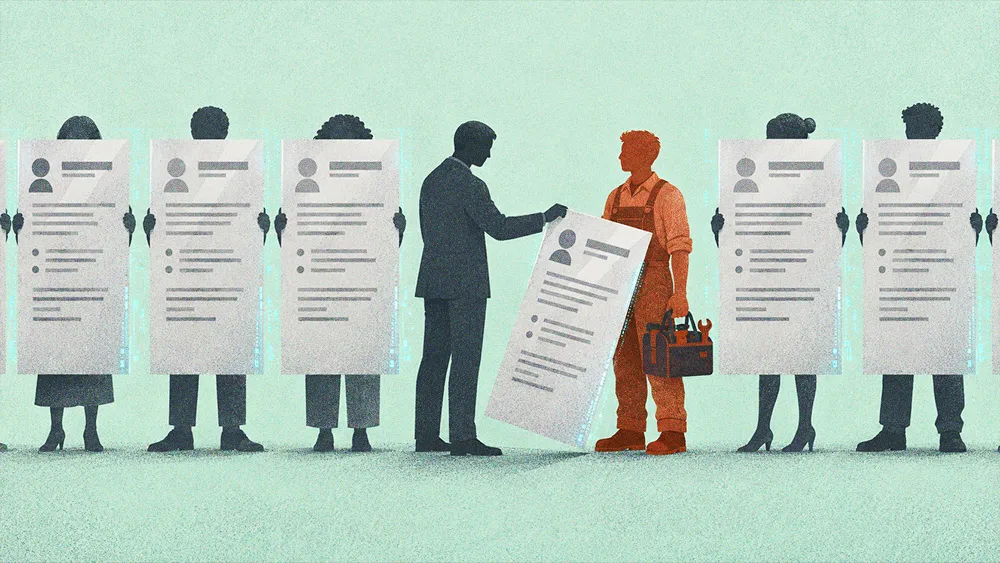


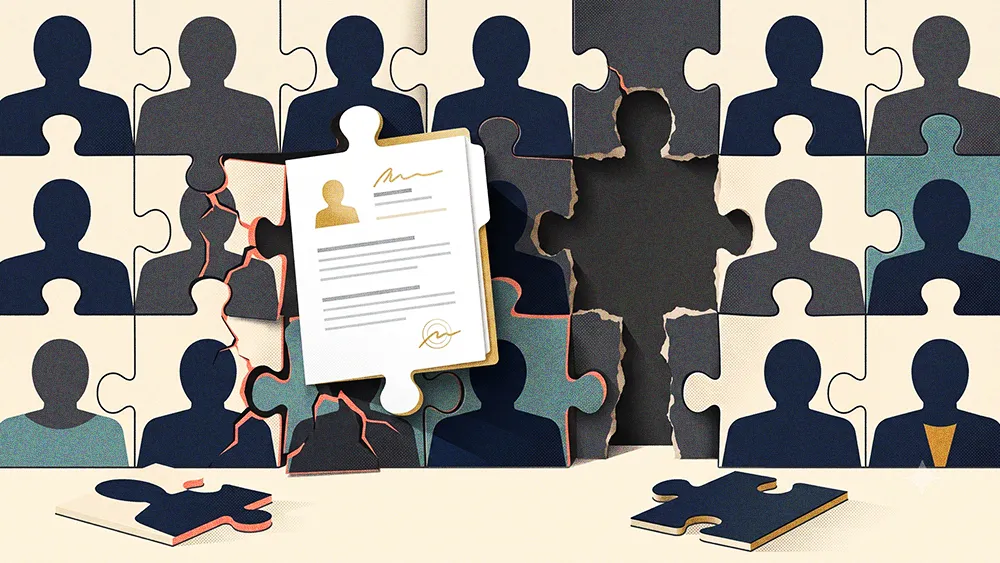
Russell Weaver, chief people officer at Embark Consulting, wrote on LinkedIn about a hire he still thinks about. "The candidate looked perfect on paper. Clean resume, fast interview loop, no red flags. Six months later, we were rebuilding the team around the hole he left." The loop had done everything a hiring process is supposed to do, quickly and cleanly. It still produced the outcome a hiring process exists to prevent.
The reflex when a hire goes wrong is to price it. Nonexecutive hires run $5,475 apiece and executive hires $35,879, according to SHRM's 2025 Benchmarking Survey of 2,371 members. The same survey found that only 20 percent of organizations track quality of hire at all. Companies can price the seat to the dollar and have no measure of the person sitting in it.
The cost that runs through the team
The sharpest accounting of what a wrong hire costs comes from Michael Housman and Dylan Minor, whose Harvard Business School study of nearly 60,000 workers traced what happens to the people around a toxic hire. A single toxic worker costs a company about $12,489, a figure built from the turnover that worker triggers plus the cost of hiring and training the replacements. A top one-percent performer, by comparison, adds about $5,303. Avoiding one bad fit is worth more than twice landing a standout, and the damage spreads by contagion. Coworkers of a toxic employee grow more likely to pick up the behavior themselves, the researchers found. It moves outward through the team, which is exactly where Weaver watched it go.
Hiring leaders sense this without being able to price it. Manager engagement fell five points between 2024 and 2025, from 27 percent to 22 percent, the steepest year-over-year drop in Gallup's 2026 report on the global workplace. Global employee engagement sits at 20 percent, down from a 2022 peak of 23. Gallup measures the aggregate, and every wrong hire seated next to a good one is a small input into that number. Morale is the soft-sounding word for turnover in its early stage. The strong performers notice first, and they're the ones with the most options.
Fast on process, slow on people
Weaver's own read lands harder than the usual advice to hire slow. "Speed doesn't prevent bad hires," he wrote. "Relationship does." His fix pulls apart two things most teams treat as one. "Move fast on process. Slow down on people." Compress the scheduling, the screening, the resume pass, and the status updates as much as the tools allow. The judgment about whether one specific person will strengthen a team or hollow it out is the part that shouldn't be rushed, and it's the part a fast interview loop is worst at.
Which half the tools help
Software is getting very good at moving candidates through a pipeline and pulling signal out of a flood of applications. The judgment about fit is the other half, and everyone should stay honest about which one the tools are covering. Software is poor at reading whether someone will hold a team together under pressure, and no resume was ever built to show that. The candidate who looked perfect on paper looked that way because paper was never going to reveal the thing that broke. A stronger read of the person, real evidence paired with a human call on fit, is what a faster screen keeps skipping past.
Weaver's team didn't lose six months to a slow process. They lost it to a fast one that never asked the question a resume can't answer. A hiring process can name who cleared the bar. It still can't name who the rest of the team will follow out the door.