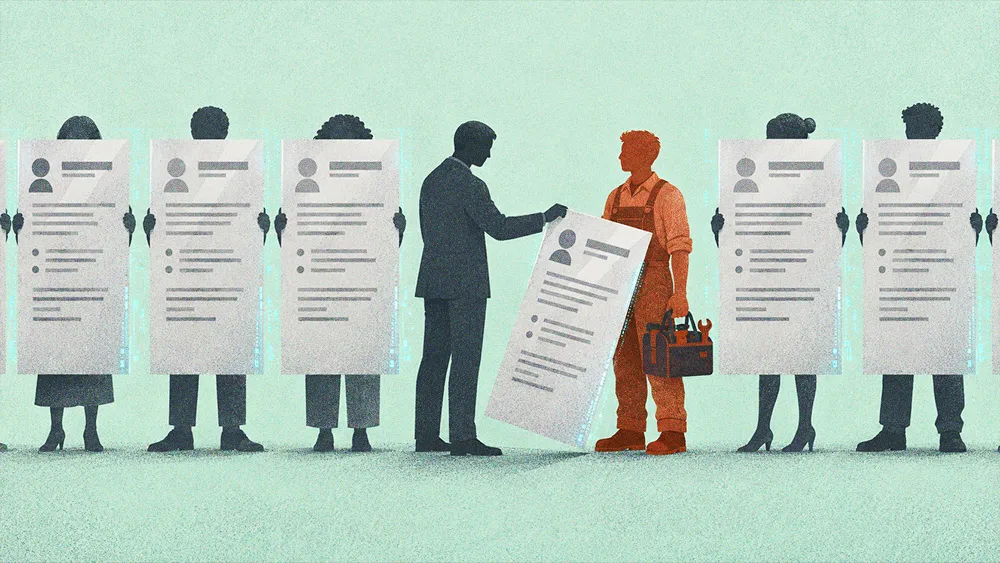


For all the announcements that a college degree is no longer required, dropping the requirement changed the outcome for fewer than one hire in 700. Harvard Business School and the Burning Glass Institute reached that number after tracking more than 11,000 employers from 2014 to 2023. Removing the degree line from a posting raised the share of new hires without a bachelor's degree by 3.5 percentage points, and almost all of even that small gain came from a minority of firms. The rest changed the wording and kept hiring the same people.
Johnny C. Taylor Jr., president and CEO of SHRM, refuses the easy explanation for that gap. The lazy read is that employers were never serious, that skills-first was a talking point all along. His own organization's numbers say otherwise: SHRM's research finds 78 percent of HR professionals say skilled credentials factor into their hiring, while only 34 percent run a skills-first process often or almost always. "The belief is real, but the behavior didn't follow," he wrote on LinkedIn.
The missing measurement step
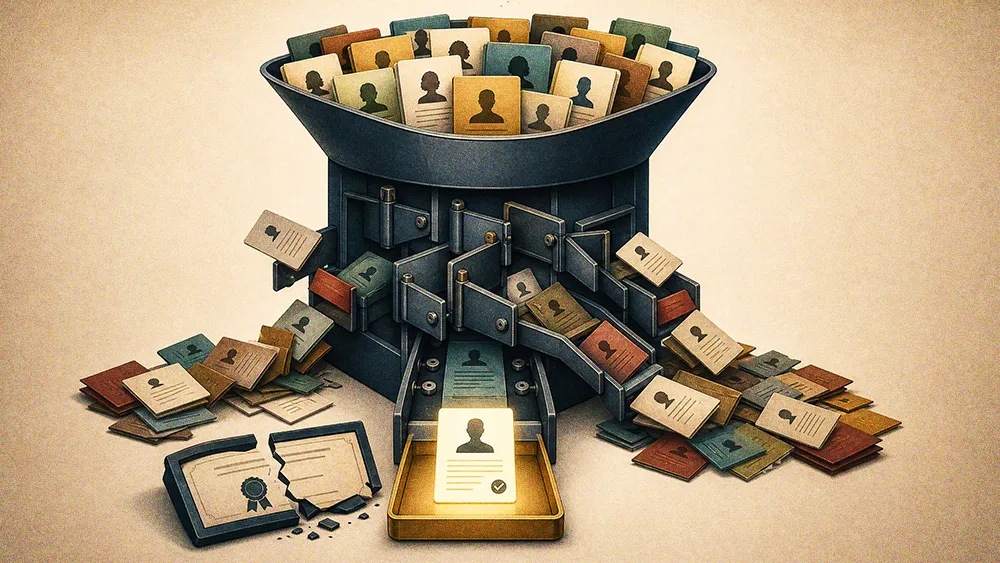
The diagnosis is a missing step. A degree requirement, whatever its flaws, is a filter. Take it out and put nothing measured in its place, and the screening still has to land somewhere. Taylor named two habits that keep the old pattern running: plain routine, and the absence of any reliable way to measure the skills on the posting. Leave that gap, and hiring "defaults to the safest, most familiar pick," he wrote, "and buries the talent organizations claim to want."
Inside the skills-first minority
The firms that actually closed the gap did it by changing the process, not the vocabulary. In the Harvard and Burning Glass data, the companies that measurably shifted who they hired were a minority, around 37 percent, and they accounted for nearly all of the movement. The Burning Glass Institute calls them skills-based hiring leaders, and the workers they brought in without degrees repaid the bet. Those hires stayed at rates 10 percentage points higher than their degree-holding colleagues, and the ones who moved into roles that used to require a diploma earned about 25 percent more than they had before.
At the company level, the pattern holds. The same SHRM survey of more than 1,000 HR professionals finds that organizations that often or almost always hire skills-first are likelier to beat their financial targets than the rest, 35 percent against 27 percent. Better belief and better results, and still the diploma wins the screen. The announcements never closed that distance.
The assessment employers skip
The answer Taylor lands on is unglamorous and specific. Define the skills a role truly needs before it posts, build a structured, job-related assessment into screening, and train the people making the call to read it. None of that is a slogan, and none of it is exotic to the researchers who study selection. Decades of validation work, summarized by the Society for Industrial and Organizational Psychology, rank structured interviews and work-sample tests among the strongest available predictors of job performance. The assessment is the piece employers keep declaring around instead of building.
The degree survives this argument fine. A diploma is a genuine requirement for plenty of jobs, and a poorly built assessment predicts nothing worth having. The failure is narrower: using the degree as a stand-in for every role, which screens out the very people a company set out to reach. A validated, job-related assessment paired with a person who owns the outcome is the combination that holds up under an audit, whether or not AI sits anywhere in the pipeline.
Skills-first was never going to arrive by press release. It shows up in the last ten hires a team can pull up and defend on the evidence, or it doesn't show up at all. Drop the degree, skip the measurement, and all that's changed is the language on the posting.